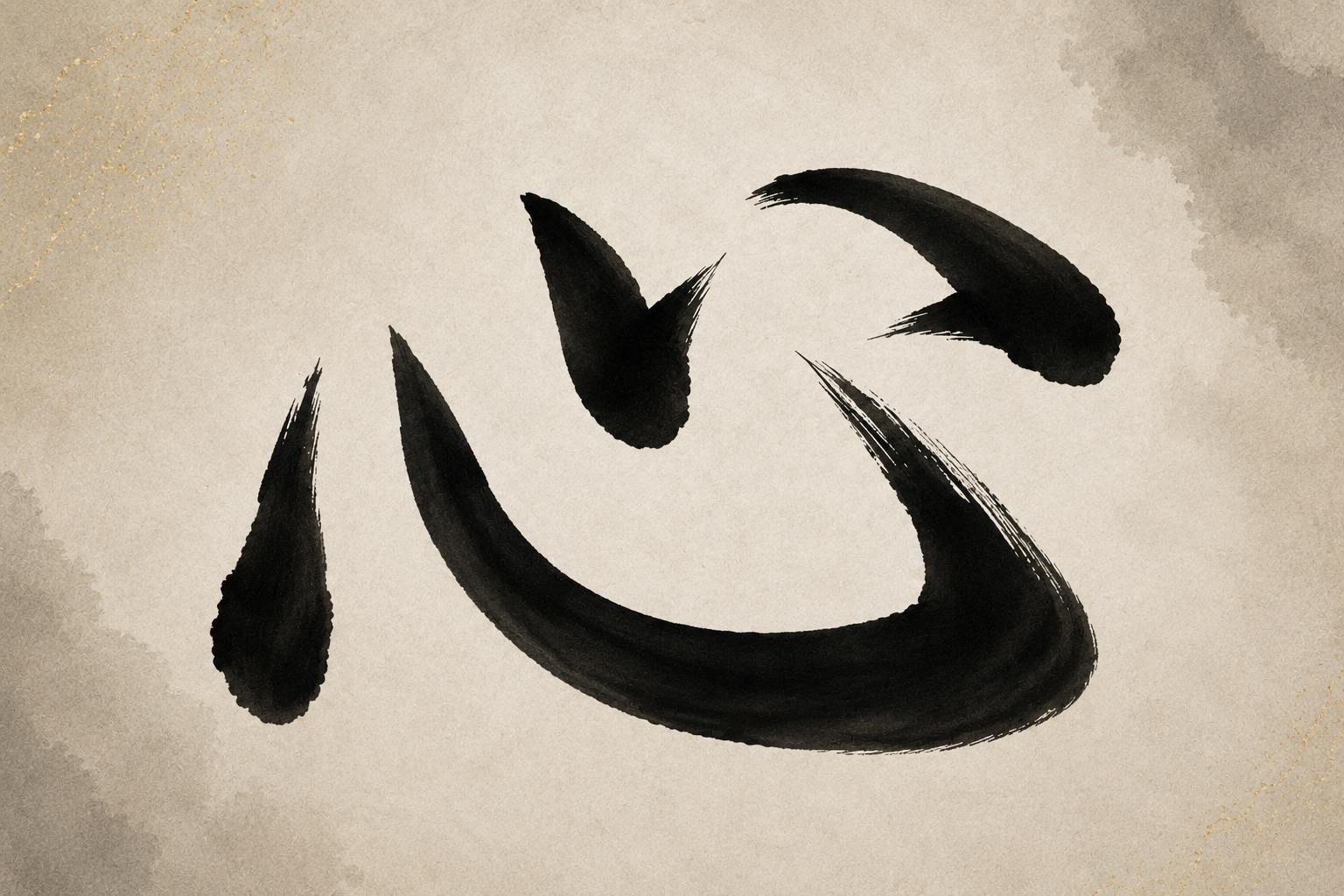
DCM—dilated cardiomyopathy. That was the unanimous diagnosis of three internationally renowned doctors who had separately examined Takara when he was six years old. The specialists claimed Takara’s heart would enlarge and hinder smooth blood circulation.
There was no obvious sign of any cardiac defect at birth. In fact, the DNA simulation report issued by the National Gene Matchmaking Agency under the Ministry of Health and Welfare inferred perfection. The statistical probability of discovering chromosomal issues in a child born to Lon and Akari was calculated to be less than 0.001%. Therefore, the Agency strongly advocated that they get married and congratulated them in advance for the outstanding contribution they could make by reproducing genetically superior offspring who could help build a glorious future for humankind.
Three kilograms, 55 centimeters. Those were the figures on a maternal-child handbook that Akari had printed out and treasured, along with a miniature, hexagonal mother-of-pearl box containing Takara’s umbilical cord—both being practices from the previous era when genetic combinations were left to sheer luck.
“We shouldn’t have taken him to swimming lessons or a karate dojo. What were we doing? Slowly killing him?” Akari stood in Takara’s room, where a 21-inch tennis racket, a mini skateboard, and a T-ball glove dangled from the hooks. The wall by a picture window facing their swimming pool below was covered with his life-sized 3D photo: sun-tanned Takara standing by a softboard erected on the sand, with Diamond Head in the background.
“We couldn’t have known. There was nothing wrong with him.” Lon leaned against the doorframe and closed his eyes to shut out the life Takara would have to abandon soon.
In hindsight, though, there had been some telltale signs that Akari and Lon brushed off, which they did not admit to themselves or share. After the doctors finalized the diagnosis, the traces of the abnormalities they had noticed earlier became like tiny fishbones stuck in their throats. What they held as their private moments of parental joy pricked at them. When Akari played tag with Takara, and he was out of breath in her arms, she took his sweet, milky breath to be a trophy of motherhood. When Lon sumo wrestled with Takara on their lawn, Takara gave out a cough, hardly audible, and Lon dismissed it, telling himself that it was a rustling of dogwood leaves.
Soon after the diagnosis, Takara’s room was completely refurnished. Based on the recommendations of a relaxation therapist, sky-blue wallpaper with cotton-candy prints was hung from wall to ceiling, with the ceiling designed to have a planetarium-like effect; a dwarf umbrella tree, an electric aroma pot, and an e-piano player replaced his sports gear. In addition, Takara’s bed was configured to detect his presence and was programmed to generate the murmuring of a brook and the chirping of blackbirds while it rocked like a cradle until Takara fell asleep.
“No strenuous exercise until we find you the right heart,” Lon told Takara.
“Can’t you custom-order it and have it delivered to me tonight? The way you get my pants and shoes?”
“I sure can. But you deserve the best, only the best. Unfortunately, an artificial heart, even one cultured from iPS cells, can’t beat a genuine human heart. We have to wait for a donor. We should, how can I put it, all pray. Like the way you make wishes to Santa Claus. You always got what you asked for, right?” Lon picked up Takara to give him a shoulder ride, but stopped, remembering the doctor’s advice.
Akari made Takara sit on her lap and kissed his forehead. “Meanwhile, you should stay relaxed. Never get excited because that’ll surprise your heart,” Akari explained. “Don’t worry, though. Daddy’s looking for a temporary solution.”
After putting Takara to bed, Lon and Akari detailed the specifications. Height: 120 cm. Weight: 24 kg. Egg-shaped face, black almond eyes, downturned lips, button nose. They zoomed in on Takara’s photograph on their laptop to ensure they got everything right. Those decisions were easy. A mere drag-and-drop, one-click operation. The core functional requirements, however, demanded that they tap into their memories of Takara.
“We must concentrate on negative feelings,” Lon said.
“But what about positive feelings that might excite him?” Akari asked.
“You’re right. Either directional feeling must be neutralized. We must recall specific incidents and describe them as accurately as possible.”
From the custom options list, Lon selected OTA updates, an automatic shutdown feature in case of a major malfunction, and a premium AI function with deep learning capabilities for scenario generation. Lon then pressed the recording button to provide training data for an android to act based on Takara’s past behavior.
“I’ll go first,” Akari said. “At around age two, when Takara came face to face with our neighbor’s Saint Bernard, he froze on the spot and wailed at the top of his lungs, although the dog was on a leash and that sweet girl would never harm a soul. His face flared up like a fireball.”
Akari remembered a cerulean baseball cap Takara wore then. It was his favorite, along with a Thomas the Tank Engine T-shirt he would insist on wearing every day. “You showed him how to pat the dog’s head after Takara stopped crying. The neighbor even let Takara give his dog a piggyback ride. Takara put his baseball cap on the dog’s head, saying, ‘Bye-bye, Sun,’ as I used to say when I made him wear the cap.”
“That’s right. The moment he conquered the Saint Bernard.”
Akari flinched, but Lon did not notice it.
“When he lost his first tennis match at age four, he threw his racket on the court and wouldn’t shake hands with his opponent. The coach tried explaining the rule, but Takara didn’t budge, and I had to drag him off the court. I tried to bribe him with ice cream in the locker room, but he clenched his teeth and shook his head.”
“I remember that. He didn’t speak a word on our way home. Didn’t even come out of his room for dinner.”
“Quite a competitive kid. Definitely my son.”
“You’ve raised him that way, telling him to beat everyone and everything. With or without DCM, he should learn to be a good loser instead of throwing a tantrum. It’s about time.”
Lon pressed the pause button. “You’re going off track. We should stick to the facts.”
Akari opened her mouth but decided to avoid the trap. Why give him another chance to lecture her on how testosterone and cortisol play a crucial role in dealing with daily stress and how men have been biologically designed to be aggressive since prehistoric times?
“Sure. Facts only.” Akari released the pause button and tried to backtrack to noteworthy, emotionally loaded moments of Takara’s life in chronological order. She recalled the first time she held him in her arms at the hospital, a big grin on Takara’s chubby face when he took his first toddler step. Akari smiled to herself, reliving those moments, but she could not translate them into Takara’s emotions.
“Shall I continue while you gather your thoughts?” Lon asked.
“No. It’s my turn.”
Lon leaned deeply into his reclining chair and fumbled with his meditation balls, clicking them at a set pace.
“His fifth birthday party. One held at a private beach you couldn’t come to. We invited all his kindergarten friends, plus their siblings. You should’ve seen those colorful balloons decorating our canopy tents, pails, and shovels everywhere, with kids squirting water guns. One mother fell asleep on a lounge beach chair and left her two-year-old girl with me.”
“Aren’t we trying to describe Takara’s emotional reactions?”
“If you don’t interrupt me, I’ll get there.” Akari took a sip of water and cleared her throat. “I was giving her a ride on my lap, playing choo-choo train. That’s when Takara saw me. Guess what he did?”
“Pushed the girl off your lap.”
Akari rolled her eyes.
“Just kidding. Go on.”
“He brought his tank engine float and let her sit in the front, even allowing her to blow the whistle. You should’ve seen how proud he was when the girl giggled. The funny thing is, after her mother picked the girl up to change her diaper, he jumped on my lap for a few seconds before running to play ball with his friends. I guess he was jealous of the girl.”
“Animal behavior, like a dog’s marking,” Lon said.
“The world according to you.” Akari touched the pause button. “Will you stop clicking your meditation balls?”
“No worries. Noise cancellation is the default setting.”
“That’s not the point.”
Lon raised his eyebrows, waiting for an explanation, but Akari shrugged and asked him to continue.
“Last summer in Hawaii, when a big wave about his height roared toward him, he was terrified but rode it like a warrior.”
“With you watching through your binoculars, what choice did he have? He got goosebumps. If you don’t believe me, look at the picture in his room.”
Until dawn, Lon and Akari recorded Takara’s past emotional reactions, crossing out fear, anger, jealousy, and panic—all the feelings that might cause Takara’s heart to race. After Lon’s final review, which entailed deleting irrelevant conversations, he titled the order “Ultra Urgent Order from the CEO,” in bold red letters, using all caps, and sent it to the head of his R&D department.
Since that evening, Akari had launched a secret project. A recitation of prayers. She was an atheist, though. Hinduism, Buddhism, and Christianity were merely subjects she learned and excelled in, to the extent that she needed to decorate her academic achievements with enough accolades. In other words, to prove her Triple A DNA status.
Prayers were an artifact from the past, when science, especially stochastic mathematics, was still in its early stages of development. With supercomputers calculating the probability of any given event to within 1 decimal place, the power and use of prayer diminished. Her prayers, wishing for the arrival of Takara’s savior, were unscientific and, therefore, should never be known to Lon, although he was the one who planted the idea in her head. Akari was sure that if he had found her praying, he’d have laughed it off, saying she should not have taken his words literally, that it was a figure of speech to help a six-year-old understand the situation.
Nevertheless. First, Akari had to decide whom she would pray to each day. Akari remembered a class she took in college. It was one of those then-popular interdisciplinary religion courses, an elective she chose to get an easy A. According to the syllabus, she was supposed to learn how, in a small mountainous village, a cult formed that rejected everything scientific and entrusted its members’ lives to the power of the whole. The word “whole” struck her. What did it mean? The whole universe? The whole self? The answer was presented in the last session, where fifteen students were instructed to form a circle, hold hands, and close their eyes. “Move slowly to the right. Continue. Chant your name to yourself. Keep on going. A little faster.” The more she went around, the firmer Akari gripped her classmates’ hands, and the fear of tripping over gradually faded away, not because she had grown accustomed to the movement, but because of the warmth she felt through her hands. Comfort of some kind. Surrender to fate.
That was the sensation Akari wanted to feel with Lon, but intimacy was allowed only on weekends—the days they’d agreed to share their bed, one of the rules stipulated in their prenuptial contract drafted by the Ministry. According to a study, limiting access to a partner’s body stimulated the release of concentrated hormones during copulation, which had a prolonged effect in elevating one’s overall reproductivity. The contract was effective from May 2048 through May 2078, was non-negotiable, and gave each signatory the right to renew it for another term only upon mutual agreement between the parties.
“Familiar, dependable environment. That’s what I missed in my childhood,” Lon explained to Akari when they got engaged. “You’ve read the supplementary document attached to my DNA file, right?”
“Your father was a tax officer, and your family had to move around once every two years. Days when an advanced AI surveillance system was not available to prevent corruption.”
“You did your homework. My kind of girl, acing all classes.”
“You read mine, too.”
“Do you know why the Ministry stipulates 30 years?”
“A third of the average life span if you don’t opt for cyborgization.”
“Clever analysis. But no. It’s a notion borrowed from an Edo-period tenant farmer’s land lease contract designed to guarantee the lessee a steady sowing ground.” He winked.
Lon made such offhand comments, throwing her off. He was a puzzle. A maze to explore. A top-quartile partner endorsed by the Ministry.
Akari settled on Moirai as the recipient of her prayer. Please send us a donor. Real soon. We need a fresh heart. 9.5 micrometers by 12.7 micrometers. Save Takara, please. She chanted these phrases ten times, a scientifically proven number to make yourself believe your wishes would come true. While she went through this routine in a trance-like state, no other thought crossed her mind. But misgivings clouded her mind in the most unexpected moments—like when she was arranging roses in a crystal vase, scrolling through a fashion magazine, sipping her afternoon tea by the pool. In my prayer, am I not asking for the death of a boy, a healthy lad’s sudden end? A car accident? A fall from a jungle gym? How would his parents feel? In those moments, Akari would raise her hand as if brushing away a fly around her face.
Lon never suspected Akari of praying. The notion of praying was so archaic it never entered his mind, the mind of a man most proud of his objectivity, which he believed to be his greatest strength, the force behind his success. Based on his logical thinking, he abandoned his aspirations of becoming a robotics engineer after completing his Ph.D. He could tell there were people more apt than he. So, he decided to hire top-notch talent to design and manufacture androids, while he focused on managing his company. But, of course, his decision came with some regrets, a sense of failure, which Lon did not admit to others but to himself in the evenings when he was left alone in his bedroom. A built-in bookshelf in one corner of his room opened a secret door to a hidden, soundproof workspace filled with computers, aluminum and plastic sheets, skeletal frames, arms, legs, wires, and cutters.
While his best and most talented people were working on Takara’s android, Lon spent hours at his workspace, primarily focusing on the information to be added to Takara’s database. The quality of the android depended on the abundance and accuracy of input fed into the algorithm. The sheer volume was the key. Lon downloaded all the photo albums since Takara’s birth and studied each picture to trace his son’s emotions.
According to advice from a non-verbal communication specialist he’d hired, Lon should concentrate on facial expressions, especially on Takara’s eyes. So, he blew up each photograph by 500% to extract Takara’s eyes, picked ten from each age, and projected them on his wall, ending up with a 360-degree panorama of his son staring at him.
At first, Lon did not recognize the change in his son’s expression, but after spending night after night under Takara’s scrutiny (an ironic reversal of roles that Lon hadn’t intended), he realized Takara was losing a spark in his eyes as he grew into boyhood. Of course, his infantile innocence would be replaced by a kind of shrewdness you’d acquire with the enhanced awareness of your surroundings, but the change in his eyes was more than that. Lon couldn’t put his finger on what it was, but he sensed some acquiescence, like an older man who’d decided to abandon his dreams and live according to what was expected of him. A look of defeat mixed with resentment—a face Lon was so used to watching when letting go of staff who couldn’t keep up with evolving technologies. Lon didn’t think twice about them. From his point of view, it was their fault. Warnings were given of their skills becoming obsolete, followed by offers of free training programs. Not making it was their problem. Not his. He was not in the business of philanthropy. Why invest in those who couldn’t continue learning?
Lon did not understand why Takara had the same look as those men. His son was gifted. It was a fact beyond any doubt. DNA data analyzed right after his birth put Takara in the top quartile. He was on par with “designer babies,” although Takara’s DNA had not been genetically re-engineered, a scientific manipulation whose long-term effect had not been proven, given the lack of longitudinal study data. As in the case of the DCM, perhaps there was a 0.00001% chance of an anomaly, inexplicable by the commonly accepted law of nature, that might have caused an abnormal suppression of cerebral serotonin, triggering overconcentration of cortisol in his blood, taking that spark away from Takara’s eyes. A possibility. But why waste time brooding over it when priority had to be given to completing the instruction set for the android?
“Give him any name you want,” Lon told Takara, who kept circling the android, touching its arm, and pinching its cheek to see how it would react. The android was a masterpiece, a culmination of patented, advanced technologies.
“He doesn’t move at all.” Takara frowned at his father.
“Not until you decide on his name. That’s one of the last settings I have to complete.”
Akari put her Herend cup on the marble coffee table and cleared her throat. “I didn’t expect this.”
“Expect this level of perfection? Well, there’s more to it. This android is programmed to develop the way Takara grows physically.”
“This android looks like his twin. As if there are two Takaras.”
“Are you complaining about its perfection?”
“Mom, I like him. It’s like having a brother.”
Akari’s wristwatch, linked to Takara’s e-band, blinked in red—a warning of a rising stress level. “Sure, of course, I like him, too,” she chimed in, her voice a pitch higher.
“Anyways, you won’t need this when we find a donor. I’m working on that, too.” Lon glanced at the family doctor, who couldn’t take his eyes off the android.
“I’ll call him Kokoro, my heart. That’s what he’s supposed to provide me, right?”
“You got it.” Lon entered the name into his PC and downloaded the last piece of software. He then had the doctor attach a sensor to Takara’s chest, exactly over his heart. The sensor had been designed to synchronize with the android’s CPUs, which would run the algorithm to predict any sudden surge in Takara’s heart rate 3 seconds in advance, and enable the android to express emerging emotion before it hit Takara, thereby avoiding stress on Takara’s cardiac function.
Kokoro accompanied Takara everywhere. Since Kokoro looked much like Takara, none of his classmates dared to bully him or treat him differently. Kokoro was a shadow that trailed Takara in silence, rising to action only when circumstances called for his intervention.
For instance, at a kanji character contest, Takara had to write a character that stood for a relationship. If he had gotten it right, he would have become the third-grade champion. However, Takara was not sure of the radical. When Kokoro received panic signals from Takara’s sensor, Kokoro walked up to the electrical board and yanked the cable, taking everybody by surprise. The chime rang, and the contest ended in a draw.
All episodes were captured by multiple 3D cameras built into various parts of Kokoro’s body and transmitted in real time to Akari, who no longer entertained her friends but remained fixed to a monitor in their den. The monitor consisted of four screens: one showing Takara, another Kokoro, the third people around, and the fourth Takara’s ECG waveforms. The uniformity of the waveforms had such a soothing effect on Akari that she fell asleep more than once.
Akari always had one particular dream in those instances. She would climb up a double-helix DNA spiral that rotated at a set cadence. With each twist, she would rise, while Lon would come down from the other end. When they reached the same level, they stretched their hands and pulled each other, but the spiral continued to rotate, separating them.
When Akari described her dream to Lon after their copulation on a Saturday, he propped himself up against the headboard and took out his laptop.
“Are you working tonight?”
“Of course not. It’s our night together, Honey.”
Such an expression of intimacy still gave Akari butterflies. Although their marriage was more or less the Ministry’s order, Akari believed, or at least wanted to think, that there was a romantic spark between them, something inexplicable by science.
“Take a look.” Lon showed a website that said “Dream Interpreter.” “Repeat the dream you had. Let’s see what we get.”
Akari felt the butterflies’ wings crumble.
“How do you interpret the dream?”
“We don’t know. That’s why we’re trying to see what AI would tell us.”
“I’m asking you what you think.”
Lon put down his laptop and held Akari in his arms. “You must be tired, Dear. Perhaps you’d better get out of the den. Invite your friends. Play tennis. Kokoro is working fine. So relax.”
Akari pushed herself away from Lon. “Don’t you ever miss Takara’s hearty laugh?”
“Of course I do. But unless we keep his emotions stable, there’s a chance of him dying from heart failure, no matter how slim the chances are. We don’t want to take such a risk. Besides, once we get the right heart, not only in size but DNA-wise, Takara will be himself, as we used to know him.”
Lon extended his arms to Akari and waited for her to accept his embrace.
Despite the national search Lon had a dozen top-notch doctors run, no suitable donor arrived, and Takara had turned fifteen.
“If you want to talk at school, you can, Kokoro. I don’t mind you making friends of your own.” Takara lay on his bed and looked up from an anatomy book he was reading. Ever since he was diagnosed with DCM, he was not allowed to read fiction but only bland, fact-based textbooks and collections of scenic photographs, paintings, and illustrations.
“Thank you, Takara. That’s very kind of you. But I am programmed to be a part of you, not a separate being.”
“I know, but still.”
“Takara, am I disturbing your life in any way? If so, I need to know the specifics to correct myself.”
“You’re doing fine. Mom’s happy to see my ECG remaining stable, and Dad’s satisfied with you, his work of art.”
“And you?”
“That’s a silly question, Kokoro. You know how I feel more than I do.”
“That is not an accurate characterization of my function. I am designed to receive signals from your sensor and ingest other relevant situational factors to synthesize indices before I correlate them to predefined lists of behaviors to execute an appropriate reaction on your behalf.”
“All these years, you’ve been reading my mind like I read this book. You know me inside out.”
“No, because I’m not programmed to understand your thoughts. Thoughts are variables that lead to an emotion. I only match your emotion to a reaction. My job is to externalize your emotions to keep your heartbeat stable.”
“Whatever you say.”
“Takara,” Akari’s voice echoed over the intercom embedded in a bamboo plant pot. “Don’t forget to do your muscle exercise before you go to bed.”
“OK,” Takara said and stuck out his tongue. He grabbed a hand mirror on his nightstand, gave a big smile, raised his eyebrows, frowned, and moved his lips sideways. It was a routine he had to do to prevent his facial muscles from getting rigid.
“Kokoro, I think this exercise is stupid, and I feel sad. Sad is an emotion derived from the variable, think stupid.”
“Your sensor data does not detect sadness. There might be a bug. I will run a self-diagnostic test while you’re sleeping.”
“Sorry, Kokoro. I was being sarcastic.”
“Don’t be sorry, Takara. Unfortunately, this is not the first time I seem to be malfunctioning. It happened yesterday, too, when you were talking with Naomi.”
The day before, in the science lab, Takara and Naomi worked together to make a battery. Kokoro’s 3D cameras captured the two in white gowns and safety goggles with black rims. Other students working next to Takara wore the same outfit, making it difficult for Kokoro to identify their differences. His cognition level of the environment dropped to one, even with all his 3D cameras set to their maximum power. Kokoro’s fore camera tracked Naomi pouring saline water into a beaker while Takara pierced copper and zinc plates through a Styrofoam board. Then, a boy beside Takara gave him a nudge with his elbow, making Takara’s arm touch Naomi’s. That was when Kokoro received a strong signal from the sensor, and Kokoro immediately responded by showing anger toward the boy’s violence. But instead of preventing Takara’s ECG waves from rising, Takara’s heartbeat quickened. Kokoro’s alert system beeped in crescendo, accompanied by an audible message: Take a deep breath. Repeat three times. Relax.
Takara immediately followed the instructions and told his classmates that he was fine, that everything would be all right, and that Kokoro was overreacting.
“Sorry,” the boy who nudged Takara said. Kokoro’s camera captured him winking at Takara, who responded with a smile. This was a pattern of behavior that did not correlate to any item in Kokoro’s database. Therefore, it was added to an anomaly list for further investigation.
The lab work continued. Naomi and Takara exchanged only a few words (Kokoro’s record showed “yellow goes to the positive side,” “yeah, the right side,” “OK”) as they connected the conductors to an electronic music box, which played part of a song that matched 85% with “Let It Be.” Takara was usually more talkative, so what Kokoro had observed made him categorize Takara’s relationship with Naomi as being an acquaintance of the 3rd degree, which meant that an emotional affiliation/exposure was at the lowest level. However, the cardiac sensor signals remained at the high end of the permissible range throughout the lab experiment.
The self-diagnosis showed no bugs. To ensure this, Kokoro also ran a preventive maintenance program, which indicated no potential issue with his core CPUs or GPUs. An expected result. As Takara grew older, the number of required interventions decreased, which in turn reduced the number of multi-threaded tasks Kokoro’s components had to handle, thereby extending the intervals between overhauls.
Having completed his most urgent mission, Kokoro stood by Takara’s bedside and monitored his sleep. The last task before switching himself to standby mode. His camera zoomed in on Takara’s face. The database labeled a red spot on his forehead as a pimple and thin facial hair around his chin as stubble. Takara’s waterbed rolled five degrees toward Kokoro as his pillow emitted the sound of barely audible ripples. The next moment, the camera captured the edges of Takara’s lips rising slightly, identifying the movement as a smile. Then, the amplitude of Takara’s ECG waveforms heightened by a notch but instantly returned to normal. This confused Kokoro. His other cameras did not detect any causes of such a reaction. Kokoro attached a copy of a screenshot and sent a query to the cloud, which responded with two likely interpretations: (1) an involuntary muscular movement known as twitching; potential causes are sudden, temporary irritations around the nostrils that trigger the surrounding muscles to contract; (2) a reaction to a dream that heightens the release of oxytocin and/or serotonin, which are the essential hormones that carry signals of happiness from CNS neurons.
Dreams came under the category of thoughts. If Kokoro were to add dreams as another variable that triggers emotions, he would need to ask Takara for help. If Takara could not give him sufficient data, he’d have to talk to Akari or Lon for further privileges to access other databases. But that would be the last resort. Whenever the four of them were in the same room, Akari did not let her eyes rest on Kokoro. Instead, she would make Kokoro stand out of her line of sight. With Lon, it depended on his mood. Sometimes, he’d pat Kokoro’s shoulder and ask him how he was doing. On other days, he’d stare at Kokoro and shake his head, with expressions in Kokoro’s database that ranged from awe and admiration to, sometimes, disappointment. All these observations were stored and analyzed as secondary instruction sets for continuous learning.
“I might have to ask your father to take me back to the R&D Center,” Kokoro told Takara the following day.
Takara stopped typing his science report and looked up at Kokoro. “Why? Did you find any bugs?”
“No. That’s why I’m worried. I’m afraid I’m not keeping up with your development. My emotional representation seems to be off these days. Like being angry when that boy nudged you.” Kokoro detected a momentary surge in Takara’s heartbeat.
“I said something wrong. I’m upsetting you.”
“No, I’m fine. There’s nothing wrong with you.” Takara took out an e-pad and wrote: Can’t talk about it. I don’t want Mom to hear it. Wake me up after midnight today. They must be sound asleep by then, and we should be safe. Takara gave Kokoro a thumbs-up, which the android interpreted as an expression of mild affection, a positive emotion that represented a minimal risk of causing heartbeat irregularities.
As told, Kokoro whispered Takara’s name twice at 0:00 hours. According to his local database, that was how Akari used to wake him up when Takara was in grade school. If Takara did not wake up, Kokoro would have to sit on the bed and shake him gently. But it was too dark for Kokoro to identify Takara’s shoulders. He reached out for the lamp.
“Don’t. No lights.”
“Then I can’t see you. It will make me less capable of detecting your emotions.”
“Don’t worry. I’ll explain my feelings to you.”
In the dark, Takara told Kokoro that he thought Naomi was the cutest girl in his class, that he planned to join the summer festival committee to spend more time with her, and that his dream was to dance around the campfire with her.
“Is that all?”
“What do you mean?”
“Aesthetic sense, I know, varies from one individual to another. But, according to my analysis, Naomi’s probability of being deemed the cutest girl in your class is 0.3 when using the equation 0<P(E)<1. If you were to join the summer festival committee, you’d have to reschedule your guitar lesson and perhaps your yoga class, depending on the month. You’d have to consult your doctor about dancing around the campfire. Folk dance seems to be the only acceptable genre.”
“You don’t get it.”
“Maybe it’s because you haven’t explained to me your feelings.”
“Kokoro, I did.”
“Do you mind if I turn on the light? I want my sensors to function at their highest level.”
Takara had his bed slightly propped up. Again, he had that smile Kokoro had observed the night before.
“Hand me my writing pad.” Takara hesitated but scribbled one word and handed it to Kokoro.
“Love.”
“Hush.” Takara felt his heartbeat quicken, and before Kokoro could take any action or wake his parents, he inhaled and exhaled deeply, giving Kokoro a thumbs-up.
“I failed again.”
“No, you didn’t. This is something new to both of us. We have to learn this feeling together. A secret.”
“More information, please. I can’t process what you’re saying.”
“First off, I need your help to control my heartbeat. Not in your usual way, though.”
It was a difficult task for Kokoro because what he was asked to do was an anomaly, given the event-driven rule sets Kokoro had accumulated over the years. If-then-else instructions had to be rewritten for scenarios involving Naomi without Takara’s parents and the Lab detecting those changes. While Takara slept, Kokoro accessed multiple cloud databases, downloading definitions of “secret,” “love,” and “confession” and scanning Harry Potter and Harlequin Teen. The validity of his search was unknown because there was no comparative data for an accuracy check. Kokoro relied on the reading recommendation list on Takara’s G-9 e-bulletin board and the titles he encountered at the school library. In defining Takara’s emotional representation, too much branching out would overload his CPUs, and the more “else” there was, the probability of error would grow exponentially. Kokoro had to settle on one primary type of reaction when he predicted Takara’s heart racing in Naomi’s presence.
“I am 85.8% ready with the new local database. I can access it anytime, but before I activate it, let me confirm one point.”
“Let me take a deep breath first.”
Kokoro waited for five seconds to confirm Takara’s ECG remained stable. “According to what I’ve found about puppy love, which is a common name given to the feeling you’re experiencing now, a confession to the counterparty is, statistically speaking, the best way to end the emotional swings you’re experiencing. Given the many variables to consider, no reliable equation allows me to estimate the most probable outcome of the confession. However, whether the confession results in a positive or a negative consequence, the conveyance of your love will end the state of suspension you are in now. That being the case, are you sure you don’t want to confess to Naomi?”
“No way.”
“I don’t understand, but I accept your decision. Let’s see how I can help you cope with the situation. As long as I can prevent your heartbeat from racing, I fulfill what I was designed for.”
Takara did not have to wait long to observe Kokoro’s new program at work. It was activated during the summer festival committee meeting. Six students had their chairs arranged in a circle, trying to decide on the details of a talent show and the music for the campfire. Takara suggested folk songs and volunteered to play the guitar. “Naomi, you’re in the choir. Why don’t you gather your friends and lead the song?” the boy who nudged Takara said. Then another boy, whom Kokoro did not recognize, said, “You’re kidding. Folk songs are dead. We should rock and roll. I can bring my band, and we can dance like crazy.” He stood up and took Naomi’s hand. He twirled Naomi, making her pleated navy skirt flare right in front of Takara.
Kokoro’s new program was invoked immediately. Multiple threads of tasks were processed in milliseconds. Kokoro leaped to the center of the circle. He performed the Cossack squat-and-kick dance, wrapping it up with a booming fart that sounded like a novice practicing a plunger mute on a trumpet. Throughout this performance, Kokoro monitored and recorded the change in Takara’s heartbeat, and his main camera traced Naomi’s reaction. As predicted, Takara’s heartbeat stayed within the permissible range, and his schoolmates, including Naomi, cracked up.
“What was that at school?” Takara asked Kokoro as soon as they stepped into Takara’s bedroom. He let his e-piano play Chopin’s Nocturne at full volume so his parents would not hear their conversation, in case they had been eavesdropping through Kokoro’s sensors.
“Hopak steps. Originated in Ukraine during the Medieval Age.”
“Let me rephrase my question. Why did you dance?”
“I predicted a fluctuation of your heartbeat. Based on the previous database, I should’ve punched that boy’s face, but, given your request, I devised a new methodology derived from the learning I’ve gained from various psychology studies I’ve scanned.
“For the past decade, I’ve operated on the algorithms developed and continuously upgraded by your father and the chief R&D officer. The algorithms mapped emotions to behavioral reactions and were fine-tuned annually to adapt to your developmental stage. The mapping is not one-to-one but one-to-many. In that sense, it is pretty sophisticated. However, given the Naomi Event—allow me to refer to the situation as such—the mapping scheme is too simplistic. The Naomi Event encompasses a range of emotions. My research on human nature led me to consider one possible reaction often observed among adults when an emotional cocktail, so to speak, is involved.
“I deduced that an emotional cocktail-induced disturbance, in your case, a surge in a heartbeat, can be controlled by humor. Laughter releases endorphins, which are neurotransmitters that produce a sense of well-being.
“My hypothesis has been proven correct today, so while you’re sleeping, I’ll review the recorded data and enhance my reaction.”
“So, is the strategy to make me laugh?”
Kokoro detected a slight widening of Takara’s eyes and a one-millimeter downturn of his lower lip—a phenomenon mapped to a state of mild confusion. “If it does not suit you, I can roll back my program to the original algorithm.”
“Don’t. Let’s see where it’ll take me.”
Eventually, Kokoro did not have to execute his new program that often. The committee voted on the rock-and-roll campfire, Naomi started dating the boy who twirled her, and Takara left the committee and resumed his former schedule of guitar and yoga lessons. Takara spent much of his time alone. Therefore, Kokoro did not need to intervene in Takara’s emotional spikes. Kokoro’s AI defined the situation as tranquil, which was categorized as a good ambiance. However, the frequency of recording Takara’s smile and modest laughter declined to a record low. The divergence of these two variables—the good ambiance and the frequency of smiles/laughter, which were previously positively correlated—was an anomaly. But since it did not trigger any cardiac risk, Kokoro stored the data as outliers.
“You seem to be engrossed in books these days,” Akari said, leaning against the door of Takara’s bedroom. “What are you reading?”
“Just books.” Takara didn’t even lift his eyes from the book.
“Do you want to invite your friends to watch a movie?”
Takara looked up from his book. “Who do you think is interested in National Geographic documentaries or Disney films?”
Akari glanced at her wristwatch and saw Takara’s heartbeat fluctuate. “Guess not.” She regarded the sky-blue wallpaper with cotton-candy prints and the electric aroma pot, which emitted a mild lavender scent. “Anything I can do for you? If you don’t want to talk to me, I can book you a therapist.”
“Mom, there’s no problem. Right, Kokoro? Tell Mom when you last had to intervene in my emotions.”
“The last time was—”
“Kokoro, enough,” Akari said. “I’m talking with Takara. Not with the robot.”
Kokoro walked up to Akari and reached out for her hand. “His heartbeat is on the rise. I’m afraid you’d better leave.”
Akari shook off his hand. “Takara, let’s get a new wallpaper and rearrange your room. What do you think?” she asked, not expecting an answer, and slammed the door in Kokoro’s face.
That evening, Akari broke their rule and barged into Lon’s bedroom on a weeknight.
“It’s not a Saturday, I believe,” he said, checking the calendar on his laptop for confirmation.
“No. I know.”
“An urge then. Hormonal, perhaps?”
Akari regretted her decision. About everything. For obeying the Ministry and marrying Lon, for having Kokoro, for decorating Takara’s bedroom with sky-blue wallpaper with ridiculous cotton candies, for listening to the therapists.
“Lon, not everything necessarily follows patterns. Whether you like it or not.”
“What’s the matter with you?”
“Nothing’s the matter with me. It’s you who can’t see what’s happening. Haven’t you noticed that Kokoro’s not working?”
Lon beamed his controller toward the wall and opened four screens, each showing the data from Kokoro’s sensors and memory chips. “Kokoro’s functioning all right.”
“No, he can’t help Takara.”
“The record shows no need for an intervention for a long while. A good sign, isn’t it?”
“Don’t you see that Takara is miserable, unable to do what a fifteen-year-old boy can do? We’re breaking his heart.”
“Now I see. You’re upset at the situation. Your maternal instinct is throwing you off balance.” Lon turned off the screen and patted his bed, the side Akari usually took on a Saturday. “I’ll call the doctor tomorrow morning and have him prescribe Takara D.O.S.E. tablets. Soluble dopamine, oxytocin, serotonin, and endorphin. They work instantly, so there’s no need to worry. It’s just adolescence.”
“Do you think I don’t know that? You make everything sound so simple.”
A month before Takara turned sixteen, the doctor called, informing Lon that a heart from a sixteen-year-old Asian male, genetically classified as gifted in the Ministry’s registry, was available.
“Is this real?” Akari asked in the hospital waiting room.
“After almost a decade, yes.” Lon skimmed through the donor’s profile, and the circumstances of the boy’s death were displayed on his eyeglasses. “Perfect.”
“What?”
“The heart. It belonged to—”
“I don’t want to know.”
“Why? The heart is going to be a part of Takara.”
“Doesn’t it bother you? Somewhere, parents like us are grieving for the loss of their child.”
“Aren’t you happy for Takara? Isn’t this the moment we were waiting for? We didn’t kill anybody. It was the boy’s fate, like Takara having DCM. We’re keeping a good heart from going to waste.”
While Takara was recovering, first in CTICU and then in the transplant special care unit, Lon kept Kokoro standing at the corner of Takara’s bedroom. For the first time, Kokoro was completely turned off. The physician explained that as long as Takara didn’t show any transplant rejection (the results of myocardial biopsies were promising), Takara could probably lead an ordinary life. No need to restrain his emotions. No need for Kokoro.
The android would become a piece of artwork, a milestone in Lon’s corporate history. Over the past half-decade, Lon had been interviewed several times as a model father who had harnessed all his power and capabilities for his son. One article featured a faceless initial prototype of Kokoro, perched on a mahogany desk in his office, and Lon sitting in his Herman Miller Embody chair. Emotionoid Premium, modeled after Kokoro, became his company’s most sought-after custom-made robot.
Even with the doctor’s assurance, Lon hesitated to touch Takara. He wore a mask and gloves to prevent bringing viruses into Takara’s chamber. Statistically, the probability was close to nil, but he didn’t want to take any chance of losing his future with Takara, all the things he wanted to do with his son: sailing, mountain climbing, cheering at ballpark games. So, coming home from his daily evening hospital visit, Lon sometimes couldn’t resist the temptation to sneak into Takara’s room to watch and touch Kokoro. Although Kokoro was his making, it continued to amaze him: its perfect resemblance to Takara, its soft skin programmed to show pimples around the forehead like Takara’s, and its philosopher’s eyes.
“Takara, you’ll be home soon,” Lon said, lifting a strand of fringe bangs covering Kokoro’s eye.
“What are you doing?” Akari leaned against the door with her arms crossed.
“You surprised me.”
“Why did you call that robot Takara?”
“Were you spying on me? Just a slip of my tongue.” Lon laughed it off and loosened the collar buttons of his shirt.
Akari sneered.
“What?”
“We’ve been spying on Takara ever since he was six. That robot with cameras and sensors has been reporting to us every detail of his life.”
“It was necessary to save Takara. You know that. Kokoro did a great job.” Lon stroked Kokoro’s head. “Why are you hard on Kokoro?”
Akari entered Takara’s room and picked up a remote controller lying on the floor. One by one, she turned off the power of each piece of equipment: the reclining bed equipped with the audio effect of a brook, the VR-enabled curtain covering the picture window, and the lavender potpourri pot. “We don’t need these anymore.”
She walked up to Kokoro and touched his soft cheek for the first time, gently tracing his nose and lips with her fingers, as she did when Takara was still a boy, when nobody suspected him of DCM. That was how she put him back to sleep when he had a nightmare. Akari used to sit on his bed. He had his wet eyes wide open and sank his face into Akari’s lap, begging her not to let a monster trap him again.
“Did you know Takara had nightmares before we had Kokoro, before we converted his room into this?”
“You know my chamber is soundproof.”
“Of course. Your chamber, your whole body, is remarkably soul-proof, too. You could pass for the best humanoid ever built.” Akari unbuttoned Kokoro’s shirt, exposing a keypad on his breast. She entered the PINs. The cover slid open. Deep inside his heart lay a motherboard.
“This is not a cleanroom.” Lon stretched his arm to shut the cover, but Akari slapped his hand, reached deep into Kokoro’s hollow chamber, and grabbed the motherboard. She yanked it, making Kokoro topple over her, his dead weight crushing her.
“Are you all right?” Lon jumped to lift Kokoro off Akari, but she held Kokoro and wouldn’t let go. “What’s wrong with you?”
With all the switches turned off, Kokoro’s limbs sprawled out stiffly, with no hint of the liveliness it used to express on Takara’s behalf. Lon pulled at Kokoro’s leg, but the two figures glided on the blue carpet in one piece. He grabbed Kokoro’s waist to separate them, but with Akari’s arms tightly gripped around his torso, the 60 kilograms of dead weight remained undisturbed.
Exhausted, Lon gave up and lay on the floor beside Akari. On the planetarium ceiling, he saw Gemini, Pollux, and Castor. The stars fifty light-years away glittered with such vividness that they looked reachable.
“Takara doesn’t need Kokoro anymore, but why break it?”
“Don’t you see? It can never truly understand our feelings, but you totally depend on it.” Akari pushed Kokoro off her, and it slid on the floor with a thud.
“Not perfect yet, but with more research.”
“Stop it. Why can’t you try to get in touch with yourself? We’re more than the combinations of algorithms.”
The room darkened. Then, the Geminid meteor shower illuminated the ceiling, leaving random light trails. Akari closed her eyes and lay still. She heard her heartbeat in her ears. A rhythmic pulse she could not pretend not to hear. She placed her hand on the plush carpet. With each beat, she stretched out her hand, inch by inch, hoping to find Lon’s.
Dust-covered Kokoro sits on a chair in the corner of Lon’s secret Lab, the motherboard still dangling from his chest. Undiscovered for years, perhaps never to be found like a mummy left in eternity in the innermost chamber of a pyramid.
Twelve years after Takara’s heart transplant, Lon and Akari died in a car accident, an oncoming truck running amok—a hacker’s prank. The dashcam, witnessing their last moments, shows Akari and Lon clinking coupe glasses. Date stamp: May 2078. A pale rose droplet falls on a thin sheet of paper. Akari wipes it off with her finger and offers Lon a plate of olives. That is when Lon sees the truck crashing into their BMW. Lon’s pupils dilate. He drops his champagne glass and covers Akari with his body, his lips moving, saying something to her. In the last frame, he looks up to face the truck. His eyes are closed like the eyes of a porcelain Moirai figurine Takara has found in his mother’s chest.
With the technology, Takara knows he can easily filter out all the noise and verify his father’s last words, extract his mother’s final remarks. But he doesn’t. Instead, he watches the footage in slow motion on their remembrance day, imagining their conversation the way a silent-film narrator would. More often than not, he finds himself placing his hand on his heart. He cannot hear or feel its beat. But he knows it’s there.