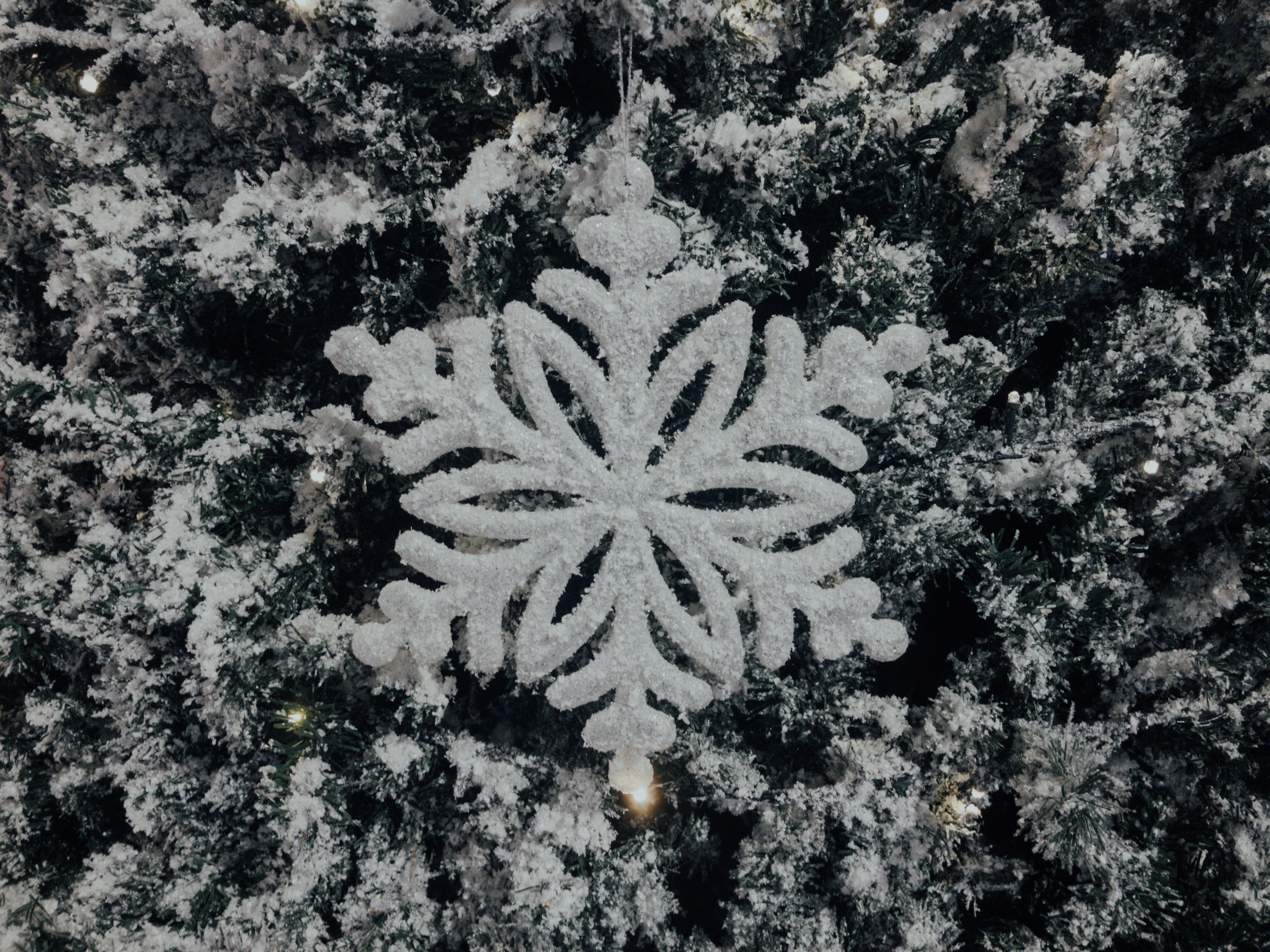
Light-Watcher used to love crawling out toward the edge of the world, away from the village’s gleaming pyramids toward the still, fractal shore that carved around a tideless ocean of air. But this time, the joy was gone. The land was wearing thin, and Primus himself was here, restless for answers.
“I do hope it was worth me rushing halfway across the world for one urgent heliograph message,” signed Primus with six stately, snaking limbs. He towered over her like a standing glass squid looming over a crystal bluebell. “You realize, of course, that you’re staking what little reputation you have on this summons, which pulled me away from Council deliberations on the surface loss.”
Light-Watcher fought back her nerves, trying to steady her soft body’s flickering glow. The fruits of her work, their world’s first telescope, would have to speak for itself. “Of course, Your Hexness. Respectfully, I think that the giant being I saw, and that you’re about to see for yourself, could matter to that very crisis.”
Primus said nothing, but stepped onto the viewing platform and craned one of his eye-stalks to peer through the eyepiece. She’d calibrated it for her height, not his, so he had to goose-neck his tall upper body downward.
He stared into the scope, then stared longer. He switched to his other eye-stalk. After a time, his smooth skin grew dull and dry.
Primus slowly pulled himself away and turned toward Light-Watcher. “So,” he said, his limbs slightly trembling, “based on the magnification you’re using, this being would have to be…”
“Many millions of times our size, yes. And there’s no telling what powers it might possess.”
“But it is certain that it has the power to destroy us.”
“Or maybe, Sir, to save us.” And they needed saving. Every arm of the world, from Primus’s opulent First to the desolate Sixth, was losing depth at the same rate, like a row of teeth lengthening from a receding gumline. And what would happen when the entire clear surface layer was finally gone, and the silvery, shining base layer so far beneath, under which nothing else could possibly exist but a gaping void, was exposed?
Primus swiveled his upper body in confusion. “This is simply incredible. A bizarre cosmic giant looming over us even as we struggle to reckon with the decay of our own world. Two bent arms and one squat, lumpy head. And so perfectly still! The other Council members from all Six Arms need to see this for themselves. Then we can decide what to do. Can you come with me—and bring this device with you? My attendants can help load it onto our carriage.”
This was a lot to take in. “Sir? You want me to come with you, right now?”
“Of course. You may have grown comfortable here on the outskirts of the Second Arm, but now we all need your help. Some are even starting to question the Rule of Six itself. So I ask again: will you come?”
Light-Watcher had never sought out this kind of pressure. Even the sighting of the giant was an accident; all she had really wanted was to help everyone see farther, someday letting them sign to each other face-to-face over long distances instead of relying on tedious heliograph relays.
But His Hexness was right, wasn’t he? In desperate times, she had to take any long-shot chance she could to give people some renewed hope that the perfect Sixness of the world still held.
Light-Watcher tried to gesture confidently. “As you wish. My tools and talents are at your service, esteemed Delegate of the First Arm. May this journey bring hope to all Six Arms.” Primus’s party was watching, waiting. It was time to go and show the Council what loomed out there.
The journey from a remote dendrite of the Second Arm to the center of the world was long, but navigation was easy. In a realm with six arms of perfect radial symmetry, to know one world-arm was to know them all, each crystal coastline a precise reflection of its neighbor.
Light-Watcher looked with envy at the families they drove past, living their lives like normal. They talked and rested in their dwelling prisms, their closest thing to shelter, since they didn’t need protection or sleep, but liked structures for a sense of comfort, beauty, and intimacy. The hungry basked in the nourishing light, or absorbed dollops of tissue from the soft bodies of the dead, wasting nothing, holding fast to their simple ecology’s closed cycle. Children played inside the hulls of stripped-out bots, the giant, spindly, six-pointed jack-shapes from which they made all their buildings and tools. The youth practiced their cartwheels by flattening their bodies, stiffening their six arms into spokes, and tipping sideways.
Talking helped divert attention and pass the time. Light-Watcher, Primus, and the attendants chatted about their families and recited classics to each other like The Song of the Three Philosophers, The Five Faulty Journeys, The Myth of the Bots that Lived, and many more, making up their own variations as they went along. The tales comforted them, for while the distribution of bots on their world was uneven and random, the basics of things were fixed and clean. The world, the bots, and their bodies still perfectly expressed the Rule of Six, all lines, curves, and angles, latticed in eternal symmetries.
But eventually, Light-Watcher couldn’t put off her worries any longer. “Your Hexness, if I may ask, how do you think the other world-arm delegates on the Council will react to seeing the cosmic giant?”
“I am not sure,” Primus said, “but I would expect contention. The surface loss has made the Council far more quarrelsome than we used to be. In fact, I think the Central Tower will be coming into view shortly.”
Because their world was completely flat, the Central Tower had been visible for a long time as a distant glint. After all, at thirty stories high, it was their tallest structure by far. But now, just as Primus said, they could start to see its features more clearly. The outside was a metal quilt of sundry parts, smooth iridescent sheets patched alongside paisley thickets of circuits, peppered with triangular windows.
Anyone standing at the top could see almost all of their world stretched around them, so the tower was always surrounded by a spiraling line of pilgrims from every arm. But now, the line was much shorter than it used to be. Many feared that the tower would topple too, even though its supports were far deeper than those of any other building.
Soon enough they arrived, and Primus and Light-Watcher ventured into the Council’s chambers on the Tower’s first level. The delegates sat around a hexagonal table, each at the side facing their respective world-arm, flinging their limbs toward each other. The Fifth-Arm delegate, who, like his compatriots, had a fairly imaginative bent, was in the middle of suggesting that the surface loss could be solved by importing sheets of ground mined from the Sixth Arm, since hardly anyone lived there anyway.
“That’s the most five-sided idea you’ve had so far, Kinesthete, and that’s saying something,” retorted Minimus, the acerbic Sixth-Arm delegate. “If we, or any one arm, lose too much surface too quickly, our world would become unbalanced and fall off of the platform that must be holding it up, and we would all perish.”
“Colleagues.” Primus stretched out his arms and upped his glow to get their attention. “Please take a break from your squabbles. You all need to witness the discovery I had left to confirm.”
As Primus explained everything, Light-Watcher helped his team set up the telescope just outside the Central Tower. The Council members soon gathered around it, putting Light-Watcher in the awkward position of recalibrating the telescope while they all watched her, waiting. She took measurements with her sextant and etched out the preliminary calculations on a pentagonal tablet, her culture’s form of scratch paper, before carving the final coordinates neatly on a clean hexagonal tablet.
Once she got the position right, she worked on the focus. She had learned to account for some unexpected refraction caused by what seemed to be a clear rectangular prism around their world. Enhancing the telescope’s magnification still further, she could see all the way to the edge of the universe, a giant cube with many orthogonal objects of varied colors lining the walls.
Refocusing squarely on the giant, Light-Watcher saw that it had moved, very slightly, from its previous position. That was crucial, since it would allow her to calculate how fast it was going, and how soon it could reach them.
One by one, the delegates came up to look through the telescope. And they all saw the giant, a being not smooth and glowing like them, but sallow-skinned, with four limbs—two aloft, and, below a looming torso, two more that extended downward to below where they could see, instead of their own six versatile and even ones—and a lumpy, distended head full of knobs, ridges, and bumps, just like Primus had seen before. A being of utterly unfathomable size. A being standing in front of a great wall that bore, as the telescope’s even-greater magnification had shown, a circle with symbols and notches all around its edge, and three hands of different lengths pointing out from the center, a sight that would soon prove as significant as the being itself.
A being who, unbeknownst to Light-Watcher’s people, had preserved a snowflake in an experimental superglue that bonded with its every needle, plate, and crevice, bartering away its chemical essence to keep its pristine shape, after which he impetuously embellished the flake with as many extra twinkles as possible, showering the surface with haphazard sprinkles of jack-shaped nanobots, programmed to regulate the scintillating designer cells—far more innovative and ambitious than synthetic lights—nestled in each of their six tips, but whose faulty circuitry soon lost power, relegating the failed prototype to a nondescript display case, and leaving the cells, free of their bot harnesses, to evolve far beyond their design parameters, all on a surface of a fancy dried glue with an unfortunate tendency to degrade.
The Council members could hardly lope back into the chamber fast enough to debate the meaning of this discovery. By default, Light-Watcher sat awkwardly next to Technê, the timid Second-Arm delegate, as they tensely waited for the others’ reactions.
“What is she doing here?” glowered Custodian, the broad, thick-limbed delegate of the Fourth Arm. If Light-Watcher looked like an upright glass squid, Custodian was more like a glass octopus. “We can’t have non-delegates at the Council table. We must keep our proceedings hexadox.” While the crisis had made all the delegates testier, it seemed to bring out a special bile in the already bombastic Custodian, whose Fourth Arm’s tradition was not to tinker with their bots. Unlike the other arms, whose inhabitants freely reworked whatever bots graced their landscape into anything that suited their fancies, Fourth-Armers kept their bots in as close to their unaltered state as possible, like a museum.
“Light-Watcher is uniquely qualified to help us interpret this sighting,” Primus replied coolly. No one asked her to speak for herself.
“How can anyone even think about decorum at a time like this?” cried Kinesthete of the Fifth Arm. “We are not alone!” His body sparkled even brighter than normal. “If this giant is millions of times bigger than us, then his world must be millions of times bigger than our world too! I wonder if his realm has four arms instead of six, since he has four limbs.”
“Don’t get distracted, Kinesthete,” said Primus. “Focus on the matter at hand.”
“Speaking of which,” said Minimus, “as amazing as this discovery is, I don’t see what difference it makes. This massive being has nothing to do with us.”
“Not yet,” said the Third-Arm delegate. “That’s the problem with you Sixth-Armers: you think small. But how can we blame you when your home is so barren?”
“Please, Architect,” implored Technê. “There’s no need for such pentadox insults. Now, listen: this being may have tremendous powers. What if we could ask it to help us?” This was actually Light-Watcher’s idea, but she thought it would sound more credible coming from a delegate.
“That’s the last thing we should do,” answered Architect. “For all we know, this being would instantly destroy us. Better to keep searching the skies for other worlds to live on and hope to avoid its detection.”
“And how would we get there?” asked Custodian. “We have to find a way to heal this world, not just escape to other ones that might meet the same end as this.”
“What way would that be? We have no other leads,” groused Architect.
“Regardless of what we end up doing,” Custodian went on, “I agree with Architect that this being is most likely a destroyer to avoid. His deformed body only has four limbs, five if you count his grotesque, oblong head. A being that does not fit the Rule of Six is not to be trusted.”
“Let us vote,” Primus offered. “Should we try to hail this giant? Yea or Nay?” Custodian certainly wasn’t interested, nor were the Sixth- and Third-Arm delegates. The vote was a three-to-three deadlock.
Light-Watcher was stunned. There had never, as far as she knew, been a tie vote in the Council, or even more than one dissent. How could this happen? Maybe six wasn’t the best number for everything after all. If nothing else, a five-member council could never tie. But she quickly pushed the pentadox thought out of her mind. Instead of dreaming about wild five-sided reforms, she would just have to persuade one of the council members to change their mind.
The thing was, Custodian had made a compelling point. Even if they didn’t know that their radial bodies came from their ancestral cells’ sympathetic imitation of their snowflake world, or that their accidental creator was infatuated with sixes, living as he did in a world with honeycomb, insects, dice, and quartz, everyone knew that the Rule of Six governed the universe.
But then, for the first time, Light-Watcher felt a spark of confidence, an impulse to speak up. “If I may,” she began, “there’s something else we should look at when weighing this decision. An object high up on the wall at the edge of the universe behind the giant. A circle. Its markings divided it into two halves of six segments each, each subdivided into five smaller markings, totaling sixty segments.”
“This is true,” Primus confirmed. “There were three mechanical arms of different lengths coming from the circle’s center, pointing to different symbols. We can detect an extremely slow movement from the longest arm. Given how slowly the giant moves as well, we think it might use this circle to track time, much as we use our marble clocks to know when to prepare for the next Night-Eon.”
Custodian gave it some thought. After rubbing his head with two of his arms, he slowly said, “So, this cosmic giant honors the Rule of Six after all, even though his body does not. Very well, I am persuaded: this is a being who would help us if it could.” Light-Watcher’s elation that her comment worked was tinged with ambivalence. If anything would sway a rigid Fourth-Armer, it would be an assurance that their peculiar take on the old ideals could somehow be maintained.
“But, Light-Watcher, if this being moves as slowly as you say,” asked Architect, “will it even reach us before our world’s surface is completely gone?”
“Yes,” Light-Watcher replied. Admittedly, her calculations couldn’t have revealed how much faster time went for her kind than the giant’s. Or that their Night-Eons were controlled by a timer that switched off the exhibit room’s light at the end of each day. But what she could determine, she declared: “As alarming as the surface loss has been, our world is deep enough that, at the rate the giant appears to move, it would reach us well before the next Night-Eon—long before total surface depletion.”
“But how could we even get its attention in the first place?” asked Minimus of the Sixth Arm. “Surely we’re too small for it to notice.”
Buoyed by her newfound success at speaking up, Light-Watcher started to think even bigger. Swirling her lithe arms all around her, she said, “We could use our whole world’s reflective surface to make a twinkle that it could see.”
“Our twinkling is far too small for that,” said Minimus. “This giant couldn’t possibly see anything we could produce.”
“Not on the scales we’ve tried before,” conceded Light-Watcher. “But if we all worked together to focus reflections from the entire surface onto a single point above it, that could create a light-focus so bright that even a being of that size would see it.”
“Oh, really? How?” jeered Architect.
Light-Watcher glowed, undaunted: “The same curved shape that can magnify light through a clear medium can also focus it off a reflective one. If we built a series of reflectors around the world and focused them on a central point, it could work.”
The repeated vote was four to two in favor of using a focusing mechanism to hail the giant. While Arm Three’s Architect and Six’s Minimus were the holdouts, Custodian had changed his vote.
The idea itself had felt utterly thrilling when Light-Watcher proposed it. But after it barely passed, she grimly realized that this would further delay her return home—and thrust her into a controversial leadership role she had no preparation for. The Focusing would reorganize their whole world. Countless structures would have to be moved to make way for reflectors. Ironically, the most developed arms would be disrupted the most, while backwaters like Arm Six would have relatively little to change.
A sticking point came with the Fourth Arm, whose bounty of preserved bots was the world’s greatest source of high-quality reflective materials. At first, the Fourth-Armers simply refused to take their bots apart. After all, the Focusing asked for an unthinkable sacrifice from a region whose people saw bot-stripping as sacrilege.
“Let me talk to them,” Custodian suggested to Primus and Light-Watcher, with unusual terseness. They didn’t know what he planned to say, but Custodian took a trip back to the Fourth Arm, and after he returned, the supply caravan started up.
And so it was done. The shiniest parts of countless bots were taken apart, pounded into perfectly curved mirrors, and transported around the world to build hundreds of focusing stations. Waves of tests from the center outward, directed from Light-Watcher’s perch atop the Central Tower, fanned to life like falling dominoes.
Throughout the process, Custodian took a leading role as a logistics coordinator, working closely with Light-Watcher. Strange, minor disruptions occasionally arose—a few missing screws here, some vandalized pentagram-etchings there, the odd gang of hecklers. But it was manageable, and the project moved forward with the collective work of its allies throughout the six arms.
When it was almost time for the Focusing, Light-Watcher went to speak to Primus in private. “Now that the time has come,” she said, “My glow is flickering from stress. Even though Custodian has come around, Minimus and Architect are still against all this, and their sympathizers have made things hard. Who knows what they might be planning? I just don’t know how to handle this.”
“Neither do any of us,” admitted Primus. “I wish we could go back to the days when the Council’s most daunting charge was to organize social exchanges between the arms.” His tall upper body hung down like a candy cane. Light-Watcher had never seen him show so much doubt, and she wasn’t sure whether to feel comforted or discouraged by this.
But then Primus perked up again and looked at her. “Nevertheless, you are doing great. Whatever foul play might arise, use your intelligence. It’s gotten you this far.”
Light-Watcher went off by herself and thought. Someone, she believed, was going to try something at the Focusing. She couldn’t just react anymore. She had to anticipate. Maybe the time had come to try something truly pentadox.
It was time for the Focusing. Light-Watcher’s team of collaborators had double- and triple-checked all the calculations, stored their rough-draft pentagonal tablets, and etched the final instructions on a large, pristine hexagon. While Primus, four of the other delegates, and their attendants guarded the outside of the Central Tower, Light-Watcher, Custodian, and their aides went inside, ready to take the tablet to the top and heliograph the correct angles to all the reflector stations.
Just before Light-Watcher started climbing the stairs, she felt a band of metal wrap around her waist. A click snapped. A hinge closed. Her limbs strained against the stiff belt, her body flashing gleams of distress.
“What are you doing?” she tried to ask, but she could barely move her limbs.
Custodian crept his large form around to face her. “I am stopping you from destroying our world.”
“What are you talking about?”
Custodian knocked the hexagonal tablet over and picked up a pentagonal tablet that was leaning against a wall. “These draft instructions will be wrong enough to botch the Focusing, but complex enough to lend the doomed endeavor a plausibility that could not be improvised.”
“But the failure will be your doing, not mine.”
“Who will believe that? These witnesses are my allies. I have been nothing but helpful to you, outwardly. It is you who will lose credibility.”
“You lied to us. We thought you were willing to sacrifice for the sake of this world.”
Custodian, now preening, puffed up his head like a blowfish. “How little you understand. I am willing to sacrifice. That’s what persuaded my fellow Fourth-Armers to cooperate. I told them that we must give up our pristine bots to your savage ransacking, just for the time being, so that this project will fail. Plain obstruction would simply lead to more attempts. When the reflector stations get these directions, the Focusing will go so very wrong that no one will ever try it again. Then we will try things that will actually work—within our world.”
“Like what? Do you even have any ideas?”
Custodian’s limbs stiffened. “Anything my people devise will be better than your five-sided scheme to hail some deformed cosmic monster to come destroy us. Meanwhile, this discovery has thrown our whole culture into disarray. Some have even suggested that this massive ghoul is somehow our creator. To think that our pristine world could ever need to have been created by anything, much less something so grotesque. Where has our self-respect gone?” He shook his bulbous head. “Enough is enough. And when you crawl home in disgrace, my people will take back the parts scattered throughout our world and restore our wrecked bots to their proper, original state.”
Light-Watcher continued to writhe in futile protest. Custodian took the pentagonal tablet up the long spiral stairs to the top of the tower, leaving Light-Watcher under the guard of his turncoats. After a long while, as Light-Watcher surmised that Custodian transmitted instructions she couldn’t see, his tendriled steps gradually grew heavier as he returned.
He started to release Light-Watcher, gently massaging her limbs where the makeshift restraint had fastened. “We wouldn’t want to leave a mark on you, lest anyone be suspicious,” he said. “Now let us go and face your shame.”
They went outside into the tense assembly of workers and watchers, everyone looking up to see only the regular dull sky.
But then, a light shone above them, growing brighter and brighter, driving them to avert their eye-stalks. Soon the whole sky filled with a radiance a million times brighter than the brightest light anyone had ever seen.
The crowd was so awed that no one noticed Custodian taking Light-Watcher aside, demanding an explanation.
“How can this be?” Custodian cried. “Those were the wrong instructions!”
“So you thought,” Light-Watcher said, her glow starting to return. “I copied the correct directions onto another pentagonal tablet and left it in plain sight, just in case someone tried to pull something like this. In fairness, I didn’t know it would be you. But your stiff mind would never think something five-sided could hold something right, would it? And now, you get to share the credit for the Focusing.”
“This is an outrage. I will expose your duplicity.”
Light-Watcher was done being deferential. “My duplicity? You’re the saboteur. Besides, you yourself executed this plan with an offensive shape. Who would believe something as outrageous as that?” she asked, trying to keep her body language calm and not gloating, although that was a little bit hard.
The crowd threw up their wavy limbs in every gesture of joy known to their people until long after the Focusing’s blinding glow faded away. The revelers hardly noticed Custodian’s rude jostlings as he slowly skulked away.
Light-Watcher turned down the place of honor Primus offered her in the Central Tower. She still liked living simply in Arm Two, finally peering out from her favored haunt near the world’s edge with renewed delight. But, now world-famous, she couldn’t just go back to the way things were. She tried her best to use her renown not to heap up glory on herself, but to teach others how to build their own telescopes and fulfill her dream of helping people see one another and talk over great distances.
Everyone wondered about the cosmic giant. While they were shaped quite differently from him, they would have been intrigued to know how they reflected their creator’s love of useless beauty. He had justified this outlandish microengineering project for its potential applications to nanomedicine, but he really just wanted to create an amazing Christmas tree ornament. The project was a perfect chindogu, a proudly overwrought invention that, if not altogether useless, was certainly not worth the effort to get it to do what it did.
Light-Watcher wouldn’t live to see this giant reach them, but she did live to see his head turn and look squarely at the world whose Focusing had caught his eye. It would be up to her descendants to navigate the dissension that had entered their world. And to fathom the meanings of this giant’s messy façade, his blotchy face and wiry nose-hairs, all the more startling to a people who had never known the unruly wrinkles of skin, the jagged banks of rivers, the gnarled madness of trees. And, ultimately, to reckon with the human’s steady approach, when he would finally open the display case, reach out to pick up the snowflake, but then think better of it, instead bringing a portable microscope to mount over it, and then patiently adjust his seat, preparing to bring the lens into focus.