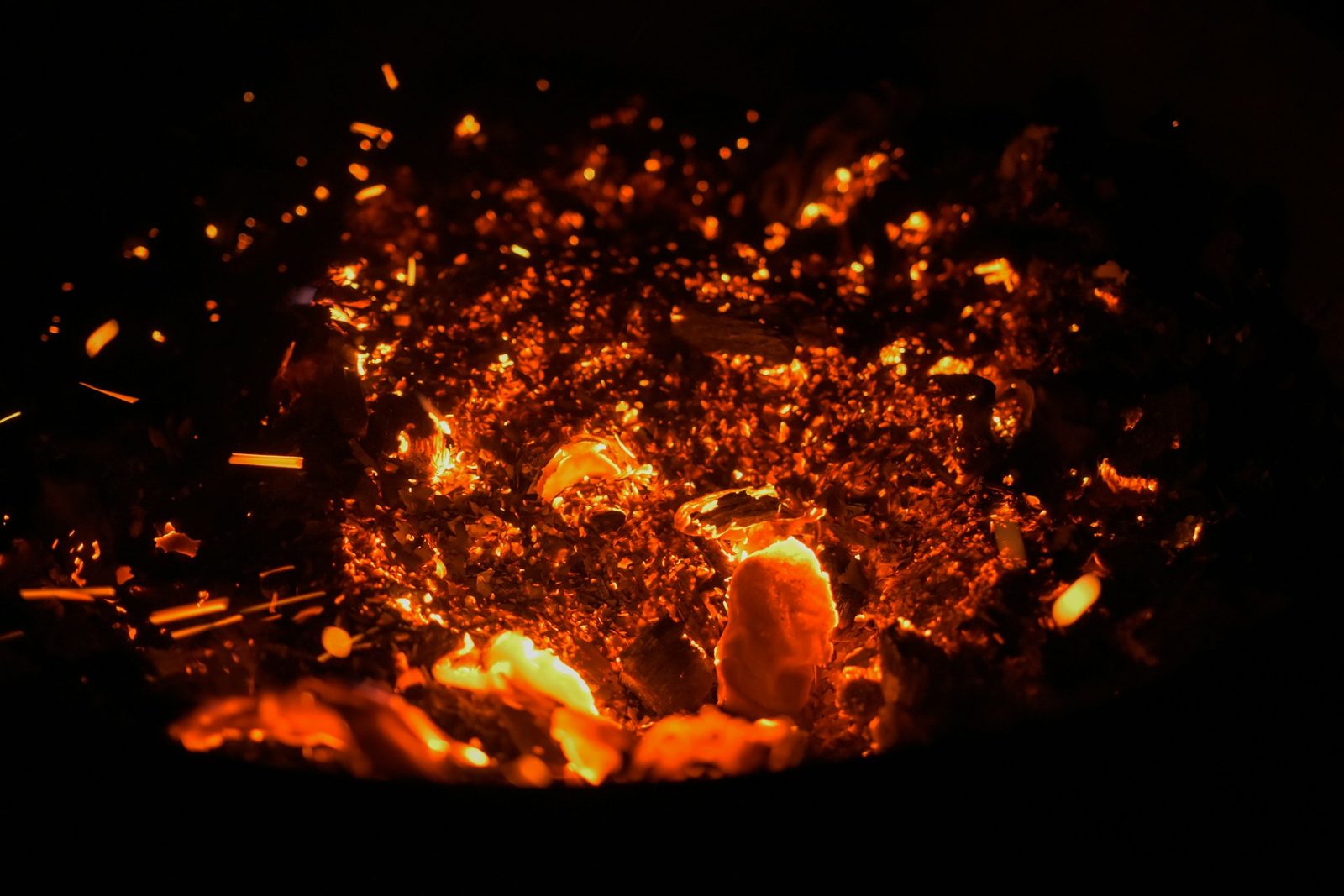
Static had graced the airwaves for a quarter when disaster came for us. The victims: three engineers, two Ag techs, two chemists, an electrician, a programmer, a department head, all entombed in Module One. By the time they knew what was happening, it was too late. A sudden breeze, doors slamming, lungs straining in the diminishing air. Then, nothing, the pinpricks of their lives cooling like embers in the dark.
Life ends with so little bravado.
One moment, Earth, so small, so fragile from our vantage, was not so far away. The next, it was lost to us. No pained goodbyes, no cries of anguish, just silence. We assumed the communications blackout would be temporary, a power failure or glitch in some system back home. But as the hours of static stretched to days and finally to months, not the slightest hum or crackle of signal rose from Earth.
One moment, love sparked my heart into flame. The next, a pressure breach in Module One doused it, and the ashes lingered like a ghost.
[Director’s Log. Hestia Moonbase. Two hundred eighty-four days since last comm. from Earth. Three days to end of Q2. Quarterly address.]
We’re not dead. Not even dying.
Consider this my apology.
I’ll keep it brief. Nine months since comms loss, six since the Module One breach, and all systems are stable. Food sustainability remains an issue, but some of our brightest are on the case. Special thanks to Kailey Kang and Magdalena Harville in Ag and Jian Zhou in Engineering for their continued genetic work.
We’ve lost, and we’ve grieved. We still don’t know what calamity back home made us lose communications. But, despite it all, we’re here. That’s what matters.
Survival alone won’t save us. So, survival must no longer be our sole question. Now, we must look beyond survival and try to recover some sense of normalcy. I know—up here, things will never be normal. That doesn’t mean we can’t try to build something. To recover, even in a small way, what we’ve lost. All departments need to begin planning their quarterly objectives toward this end.
Not surviving.
Living.
Blue jumpsuit, hair a cocoa sheen in the leaf-gold light, a mote of humanity pawing through soil—
Mag wiped a trail of dirt mingled with sweat across her sleeve. She savored the smell, rich and loamy, rising from the fresh-turned earth. Above her, the gridded panes of Biome-3B glowed, a mirrored image of her surroundings against the backdrop of space behind. Biome-3B’s broad dome stretched over half a hectare of dark soil, a pantomime garden: no birds singing, no bugs droning, no wind rustling softly in the brush. It was one of the few things they had in abundance: quiet.
She and Mason were planting wheat today, Triticum lunarum, specially engineered for low gravity. Other lunar subspecies filled the remainder of the greenhouse, languishing more than flourishing: a few bean pods had begun to sprout in the patch to her left, but far from enough. Spots of bare soil gaped in the adjacent spinach tract where just days ago live plants had grown, and dozens more stems had begun to droop for seemingly no reason at all.
Mag sighed. Like all such ventures, theirs had begun with optimism. NASA’s Artemis program concluded with fanfare a quarter century ago. Those initial forays into lunar colonization, a scientific and public relations triumph, triggered a cascade of research and capital as every petty official, celebrity meddler, and self-proclaimed world-changer jockeyed for a seat at the table. And so, even as the glaciers melted and the water vanished from the great river basins, even as the oceans toxified and the forests burned, humanity pressed to the stars.
Initially, the program’s success registered as less than a blip in Mag’s mind. Her interests were more prosaic, botany, namely, with an eye toward climate resilience. But the rising tides of lunar expansion would spare no one, not even an eighteen-year-old botanist-to-be. Ten years and three degrees later, she surfaced in Oracle, a speck of a town nestled amid the washed-out red granite of Arizona’s Santa Catalina Mountains, home of Biosphere III.
Closed ecological systems ranked among the top of the space industry’s concerns. Mag worked as a postdoctoral fellow at Biosphere III for precisely this purpose, to help fine-tune the conditions under which plant life, and consequently human life, could thrive extraterrestrially. Her work earned her a role in the first attempt at permanent lunar colonization, the Hestia missions, aptly named for the Greek goddess of home and domesticity. Now in her mid-thirties, Mag boasted permanently grimy hands and a perpetually aching back, tokens of her unflagging efforts to keep the Moonbase community from starving to death. And what, she wondered, could be more domestic than that?
From the pouch at her side she lifted a clump of seeds, tiny, brittle carriers of life, and gently let them fall into the hopper of the seed drill. A few rows to her right, Mason straightened and slapped the dirt from his gloves. “Done,” he said. “And I beat you again.” Sweat rimmed his wide-set eyes. Smears of mud streaked across his short-legged, slender frame. “Kailey and I might nap while you finish up.” He hoisted the seed drill over his shoulder. “Maybe play some cards.”
“Perfect,” Mag quipped. “That’ll give her just enough time to beat you.” The door clicked shut behind him. Mag gripped the seed drill and began her final row, timing her steps to the drill’s rhythmic clacks, focusing all her attention on the noise—anything to quell her perpetually rising dread.
Once finished, she pressed the blue button to begin irrigation and followed Mason into the cramped anteroom. The room, which initially served as an entry hall to the six biomes of Module Three, now doubled as an office space. Sagging tables lined the walls, weighed down by seeds, lab equipment, and all manner of tools.
Clods of dirt fell as Mag removed her gloves and deposited them on the nearest open surface. Her eyes followed Mason’s muddy tracks to where he stood holding a near-empty jug of seeds over a scale. Kailey sat hunched beside him, her black hair shrouding her face as she leaned over an ancient laptop. Mag deposited her leftover seeds into the jug in Mason’s hand. Kailey eyed them with a detached expression. “Mass?”
Mason placed the container on the scale and waited. “0.578.”
Mag watched as Kailey typed “89.422” into the column marked “planted, kgs Triticum lunarum.” Her eyes darted to the cells above: 89.388, 89.613, 89.195, etc. for six rows, then a vast reduction just before the comms blackout. The adjoining column, “yield, kgs Triticum lunarum,” told a different story. A low 1,781 peered from the nearest cell, down from the cells above and barely more than the harvests pre-blackout. With each new harvest, crop yields plummeted. Grains, greens, it didn’t matter—everything was failing.
Kailey groaned and slammed the laptop shut. “What are we doing wrong?”
“I’d love to know,” said Mason.
“So would the director,” said Mag. Base director Jan Kaminsky had scheduled a meeting with the Ag Department at the end of the workday, no doubt to discuss their lackluster results.
Mason sighed. “Any chance he just wants to say hi?”
“What do we tell him?” Kailey said.
“The truth,” Mag said.
“I hate the truth.”
Silence plopped down like a wet blanket. Theirs was the most critical work, but also the most volatile. The three of them helped run the Agricultural Department. The department, initially twelve strong, had expanded post-comms blackout to include an additional dozen workers, all part-timers reassigned from other departments. Biomes sparsely used beforehand now sported plants wall-to-wall. Even with the expanded growing space, they had failed to increase food production to the levels required to sustain the base in perpetuity. They needed a breakthrough. But that was the problem with breakthroughs: you couldn’t plan them.
A glum feeling settled over the room, the faint percussion of rainwater in 3B the only sound. Emily’s freckled face swam into view, her hair perpetually knotted in a disheveled bun, the grooves that formed at the corners of her eyes when she laughed. Mag let the image sit as more thoughts rose, unbidden, from the well of her memory.
“I was thinking,” Mag said, “about Emily. I sat by her at the first meeting after comms loss. Everyone was crying. Even I was crying, and Emily says, ‘Well, at least we’re not stuck here with a bunch of dumbasses.’”
The story had its desired effect. Mason’s face cracked, and he laughed, Kailey with him, and the bright noise bounced from wall to wall. Then the laughter ceased, and the sound faded, and the air thrummed forlornly in the aftermath.
“She was always funny like that,” said Kailey.
Together, they watched the water from Biome-3B tap against the window. They stayed, rooted in sadness and memory, until the sprinklers stopped, and the last drops of water had sunk into the newly sown ground.
A memory: lunar night nine months prior, a stolen kiss in a darkened greenhouse, Emily’s eyes awash in starlight.
Mag sat with her back against the wall of Biome-3C, the heat of that distant night flushing over her. Rows of vegetables spread out like an audience before her, their leaves wimpling softly in the artificial breeze.
“You know,” Emily had said—a different day, just weeks into Mag’s contract, months before the comms blackout. “I never asked where you’re from.” Emily’s hair shone with the slightest tinge of red where the sun struck its edges. Stems rustled against one another as the two of them pollinated strawberries. Biome-1C, half the size of its cousins in Module Three, was silent save for the sounds of leaves and breath.
“That’s a complicated question,” Mag said. “But Texas.”
“Texas.” Emily animated her voice in an exaggerated southern drawl. “Whereabouts in Texas?”
“That’s the complicated part.”
“I see.”
“And you?”
“I’m from the simpler part.” Emily inserted her pollen-covered brush into the last bloom of one strawberry bush then shuffled to the next one. “So tell me about Complicated. I’ve never been to that part of the state.”
Mag’s gaze flitted to the nape of Emily’s neck, where the loose hair from her top-bun bobbed lazily. “We moved constantly for work or to live near relatives. Mamá always had bad luck with jobs.”
“Was there ever a dad?”
“Mr. Patriarch. We call him Lee. He’s the mayor of Complicated.”
Emily grimaced. “Lee.” She said his name like it was something unfortunate she’d just stepped in. “Enough said. So, you’re here for now. What happens when you’re back home? Will you go back to Complicated?”
Mag dropped her face and let her cheeks dimple sheepishly. “Why do you think I came here?”
When she was seven, Mamá draped a string of colored lights over a potted plant at Christmas, and she and her brothers made a Nacimiento from construction paper and crayon. Brown, cigarette-smelling carpet stained beyond recognition of its original color. Mag couldn’t remember which apartment they’d been living in at the time, only that it must have been one of the half-dozen small South Texas towns they’d cycled through in her early years. That was her first Christmas without Lee. What struck her most in hindsight was Mamá’s smile, the way, for perhaps the first time, Mag had seen it reach her eyes.
Time passed, maybe hours, maybe minutes, and the air pressure changed as the door swung open. Mag kept her eyes closed, and soon the warmth of Mason’s shoulder settled beside her.
“Hi, friend,” Mason said.
“Hi.”
Silence, their breathing synchronizing, falling into rhythm. “What do you think?” Mason asked.
Mag sighed. During his address that morning, Kaminsky had put the notion of recovery in her head, and there it had lingered, sending her thoughts backward instead of forward, yearning for things lost. Strawberry bushes pervaded her recollections, which felt more and more like dreams. Emily was slipping away, but her ghost had cinched a tether around Mag’s heart.
Mag and Emily had kept their pairing secret as much for fear of consequences as for the thrill: relationships were against code. Emily couldn’t care less what others thought, but Mag feared that, with Hestia’s situation so perilous, their colleagues might grow to resent them. She felt ashamed now for having wasted energy on something so frivolous when survival hung in the balance. Though she craved the comfort of her friends now that Emily was gone, she could not bring herself to be selfish again.
“Have you talked to any of the others?” Mag asked.
“Yes. A little,” Mason said.
“And?”
“A whole lot of nothing from Kirsten and Thad. Hydroponics. Better seed care. I saw Dion too. He’s as lost as everyone else.”
“Everyone but you.”
“I’m just happy the director hasn’t thrown me out.”
“I’ll see what I can do about that.” As always, her humor served her well. In low moments, it was the perfect mask.
Mason chuckled and leaned his head until it rested against her shoulder. Half-remembered images swept over her. Module One with its tall stalks of corn and tender fruit. The cacophony of its dining-hall-turned-conference-room, the lost voices of friends who vanished when disaster sucked them from life into memory. Emily, the Ag techs Aidy and Nika—her first friends at Hestia. At first, Module One was simply Hestia Moonbase. As the powers that be expanded funding, bigger facilities sprang up. Biomes in Module Three, bigger kitchens in Module Two, expanded quarters in Module Four. And so, Module One sat, little used and eventually neglected, save for small greenhouses, extra labs, and storage space.
Curiosity piqued within her at the thought. The plants in the biomes would have died within minutes of the pressure breach, suffocated by the loss of oxygen. But those weren’t the only plants in Module One. Mag conjured a mental map of the module. Its biomes lay in direct sunlight, but its windowless kitchen was nestled in its darkest corner, burrowed into the slope of a crater. Certain plants had grown only in Module One, like corn, potatoes, and the leafy bushes which had borne clumps of candy-red strawberries.
Recovery.
Mag sat up, the gears of her mind spinning into action.
“What?” Mason asked.
She smiled. For the first time in months, something like lightness had lifted in her heart. “How would you like to have strawberries again?”
Director Jan Kaminsky’s office in Module Four was a still-life of soured ambition. Degrees and honors, their frames dusty, filled the wall behind a desk stacked with dried cups of instant coffee. He’d been letting his beard grow out lately, Mag noticed, a minor indulgence which he wore with the pride of a stubborn child.
“Are there any angles you might be missing?” Kaminsky asked. The nine full-time Ag staff sat before him in two cramped rows.
Thaddeus, the department head, answered with his familiar scientific sterility. “Possibly.” He spoke softly, his head downturned in a way that might read as shyness if you didn’t know him. “But we were never meant to sustain the base through agriculture alone. Living systems are complex. Maybe they don’t like the soil. Microbial imbalance. Sometimes, organisms just don’t want to cooperate.”
“There doesn’t seem to be any singular cause,” Kailey said. “They’re just…giving up.”
The director sighed, his forehead creasing. “Well, that one hits home. We never win, do we?”
An understatement so profound it should win some sort of medal.
Artificiality was the problem: how did one recreate at a minute scale processes of decomposition and renewal that nature had perfected over eons? No wonder the crops were fading. Genetically engineered or not, they were, in the most literal way possible for plants, exhausted.
Mag had encountered similar problems during her time in Oracle. Biosphere III, its high, airy dome imposed upon the landscape like something out of a movie. Through a combination of testing, tinkering, and cutting-edge gene hacking, they had acquired just enough proficiency in the art of closed-system agriculture for the project leaders to declare it a success. The difference? In Oracle, when your shift was over, you could go home.
“You understand what I’m up against,” Kaminsky said. “Sixty-five people I have to lead. People in various states of mental unwellness.” He paused, considering. “Some of whom are holding up better than others. That was me at first. I thought we were going to starve, that there was no way out. I’m grateful to you and everyone else in this sorry little complex for keeping me alive despite myself. Maybe I’ve swung the pendulum too far the other way, and I’m too hopeful. Well, I don’t care. We have to make something of this.
“So.” His eyes snapped back into focus. “What goals do you have for me?”
Thaddeus spoke first. “The team agrees that we should revisit the idea of hydroponic farming. Since our more traditional growing methods are getting fewer returns, this could be a good supplement while we diagnose the problem.”
“Good,” said Kaminsky. “Convert some greenhouse space to hydroponic farming. What else?”
Mag leaned forward. Her earlier melancholy had gifted her the idea. Emily was gone. But perhaps there was a way to keep something of her alive. “I have a thought,” she said, bracing herself. “There’s a lot of genetic material sitting in Module One.”
She could feel the heads around her whirring, parsing her words. Kaminsky tilted his head an inch up and down, inviting her to go on.
“The food in cold storage. Any vegetables stored there at the time of the breach would have stayed frozen. Unless something happened to the vacuum seal, those plants should be preserved. We can thaw the seeds and grow them. Same principle for the root vegetables. There should be salvageable DNA even if the cells themselves are dead. We use micropropagation.”
Silence. A drip of anxiety coursed through her. Just when she thought she could stand it no longer, a voice behind her muttered, “Shit, that’s good.”
The tension dissolved in a smattering of laughter, and she breathed a sigh of relief as Thaddeus spoke up again. “I like it. A more diverse diet will improve nutrition and morale. And the new plants might help our existing ones grow better. Diversity never hurts.”
Mag glanced around. A few faces turned down in thought, a few people still whispering, a few nodding in affirmation. When she met Thad’s eyes, the corners of his mouth lifted ever so slightly.
“Alright, Harville,” the director said. “We’ll do it. There’s some small risk involved, but I’m not worried. I trust you to run a salvage op. I’m more worried about what happens if we don’t.”
These final words lingered in the air, a reminder of the stakes. Mag’s gaze drifted to the round, porthole-style window behind Kaminsky’s desk, the only indication of the world outside: low, gray hillocks set against a black canvas, cold and inhospitable. Through the slanting light, she saw Emily’s face, statuesque, marble-white, beautiful and haunting, and the ghostly face smiled, and the cheeks bloomed with red the color of strawberries.
Mag plopped down on the hard mattress. Hours had passed, and the inside lights had dimmed to their nighttime settings. She lifted the shade on her window and watched Earth, cerulean and white against the backdrop of space, arc across the sky. She lifted her journal from the bedside table and scribbled, The blue marble: unreachable, ever-present. She rifled through months of entries: her nervous excitement at arriving on the Moon, guilt at leaving her family, the initial stirrings of feelings for Emily…her entry about the pressure breach. One moment, love sparked my heart into flame, she had written. Her gaze lingered on the word love.
Reflexively, she glanced at the scalpel lying amongst the detritus of her nightstand. A lump caught in her throat. She became suddenly aware of the pulse in her wrists. Her tender skin would part so smoothly, so gently under steel. She pictured her blood running rich and gleaming down her arms, and she could almost feel the rush like icy water running down her neck and into her toes.
Mag set the journal aside and picked up the scalpel. She had stolen it weeks ago in a rush of what felt like madness but had successfully ignored it until the past few days, when the thought of cutting herself made her head swim like she was drunk. She knew better than to trust intrusive thoughts. At the same time, the tension inside her had become nearly unbearable. Was it so wrong to crave release?
She would start small, a short slice through the top layer of skin. Then, a quick wipe and a splash of water, and the evidence would be washed away. It would be like nothing had happened. But when she raised the scalpel to her wrist, she caught her reflection in the blade, that face so like her mother’s, the dark eyes and rounded chin. She shuddered. Mamá would be ashamed of her.
She threw the scalpel toward the sink and fell back into the hardness of her bed.
Mag stood beside Mason, listened to the steady rise and fall of his breathing. She had snatched a spinach leaf from the biomes on her way to the airlock, and she held it now by its rough stem, twirled it, watched the stale reflection of the lightbulbs flash against its matte green surface.
She tucked it near her wrist when the blue-clad technician pulled the spacesuit over her.
“Feeling alright?” the tech asked her. Mag smiled. She had always liked Jessi’s hair, its short, twisting ringlets.
“I’m okay,” Mag whispered.
“When was the last time you were out?” Jessi asked.
Mag leafed through her memories. There had been the training runs when she first arrived, but that was it. The suit’s weighted boots always felt clunky and awkward on her feet.
“It’s been a while.”
A soothing smile spread across Jessi’s face, as if to say: You’ll do great.
Mason waved his arms, testing the suit’s stiff, rubbery frame. “Feels good!” He jumped, rising a foot into the air before buoying down and landing with a soft whump. Beside him, three identical figures stretched, stomped, and tested the grips on their various tools. Thaddeus would be joining them, along with two engineers, Jian and Landon, whom the director had assigned the task of hunting down usable computer parts.
“I’m going to power you up.” Jessi moved to the back of Mason’s suit and reached with her circular fob for the pad hidden behind his air supply. Mason locked his helmet into place, and the suit’s smooth, amphibian skin bulged with air.
Mag fitted her helmet into the grooves just above her neckline and twisted until it clicked. Jessi’s voice came through distorted and muffled. “Ready?”
Mag nodded and flexed her fingers as stale oxygen flooded the suit, and the familiar neon-bright interface flashed onto the visor screen. Air, power, pressure: all good.
Mason’s voice crackled over the speaker. “You there?”
“Here.”
“How are you feeling?”
“I’ve felt worse.”
The speakers popped as each of the other three suits powered on, and the airlock door clanged shut behind them. Jessi’s voice hummed in her ear. “All set. We’re starting decompression.” The indicator lights along the wall shifted from red to yellow, and a metallic sucking noise filled the room then faded just as quickly, replaced by the eerie quiet of the vacuum. She could hear her heartbeat, the fluid sounds of her body, and a heavy breathing she recognized as Landon’s.
Director Kaminsky’s voice rumbled through the helmet. “We’ll be monitoring your channel. No need for a play-by-play, just keep us apprised. Good luck.”
When the indicators flashed green, they were out.
Moondust crunched soundlessly beneath her boots. The landscape at her feet, though contrasting in color, was a negative image of the sky, gray speckled with shadows instead of black with the white of stars, equally void and stark.
They settled into single file, Jian leading and towing the wheeled rack which held storage bins and the engineers’ tools. After fifty meters, they rounded the back of Module Two, and Module One rose before them, gray and hulking.
When they reached the airlock, Jian unlatched a drill from the cart and pressed it to the door at waist height, the location, she presumed, of some invisible locking mechanism. The drill bored soundlessly through the door, specks of aluminum and fiberglass shooting away and gliding into invisibility. He drilled three holes and jerked the door open.
Rumpled spacesuits lined the walls. Even empty, the humanness of their shape unnerved her, like sentinels guarding the entrance to a tomb. The light from Jian’s headlamp bathed them in shadow, and they seemed to move, stirring as if woken. She kept her eyes straight ahead until she passed through the airlock and the spacesuits faded from sight.
“We’re in,” Jian announced.
The corridor ran for fifty meters, bisecting three equally long and straight hallways at the center and at each end. Pillars of light cut through the shadow at sparse intervals, slicing down from the narrow windows. The hall, as far as the beams of their headlamps could penetrate, was empty. Their destination lay at the far end of the module, where the wan light faded into black.
Doorway after doorway materialized from the penumbra of the hall, the shadow deepening as they passed beneath the slope of the crater. It might have been her imagination—the suit was designed to insulate them from outside temperatures—but she thought she could feel it growing colder.
At last, the beam of Jian’s headlamp caught the slate-gray letters which marked the entrance to the kitchen. Inside, the stainless-steel surfaces shone with reflected light. Landon nodded to them. “You’re up.”
Mason lifted a storage container from the rack of tools and grabbed the sample bags from within. He handed a stack of bags each to Mag and Thad, then met their eyes in turn.
“Ready? Let’s hope there’s something in there,” Mason said.
“We’ll either be heroes or the laughingstock of the base,” Thaddeus said.
“I couldn’t bear it if a bunch of postdocs thought they were smarter than us.”
Jian wheeled the cart back through the door from which they had entered. “We’ll meet you back here when we’re done,” he said.
“See you in a few,” Landon called.
Slowly, Mason approached the walk-in freezer, placing his hand on the latch. “Here goes nothing.” He tugged, and the door swung open. Through the headset, Mag heard him sigh. No—the sound was coming from outside, a gust of air. She held her breath and looked at Mason, who mirrored her gaze with wide eyes.
“The seal held,” he whispered. Which meant everything in the freezer had escaped the vacuum. No earthly environment could approximate the temperature to which the room would eventually have fallen. The seeds would be frozen solid, dormant, ready for germination once thawed.
“What do you see?” Kaminsky’s voice.
“The seal’s intact,” Thad said. “There’s at least two dozen unmarked containers. All frozen.”
Mag hefted the nearest bin from the shelf, pried it open, and nearly wept in relief. There they sat: bruised and glazed with frost, but otherwise perfectly preserved, the round red globes of tomatoes.
“Look!” She lifted one up for them to see, then began frantically stuffing them into a sample bag as Mason and Thaddeus explored the remaining boxes. Corn, yams, onions—each time they announced a new find, she felt a piece of herself coming back to life.
When they were down to the last two bins, Mason spoke the words she had longed to hear since that first moment of inspiration in the biomes: “Here’s your strawberries.” He tilted the box toward her. Jagged with ice, the strawberries glistened like rubies. Joy bloomed within her then withered just as quickly, a new thought pressing against her heart—the last hands to touch those berries might well have been Emily’s.
Back in the kitchen, they organized their samples and waited for the engineers. Mag stared at her boots. Far from assuaging her unease, the strawberries had frozen Emily’s face in the front of her mind. Emily was here somewhere, along with Aidy, Nika, and seven other bodies.
Mason cleared his throat. “We could search the biomes while Jian and Landon finish up.”
The suggestion hung limply for a moment before the director responded. “Why?”
“Computer scrap. We had some laptops in there. It might save Jian and Landon some time.”
A second’s hesitation, then, “Knock yourselves out.”
Mason faced her. “Want to come?”
“I can stay and watch over the cargo,” Thaddeus said.
Mason nodded and beckoned to her. Robotically, she followed.
The biomes lay just off the module’s central axis. A march down the hallway, a turn to the left, a few floating paces, and they were there.
Biomes. The gray letters shone in the light of the headlamps, their glow an ambiguous smile. Mason hesitated, eyes fixed on the letters, steeling himself for whatever lay behind. After a deep breath he turned the doorknob and nearly leaped inside. Seconds later, his voice echoed through her helmet: “Clear.”
Module One’s biomes were laid out almost identically to Module Three’s: an anteroom with doorways leading to the greenhouses. Mag’s feet slid across the dusty floor, driven by a will of their own. Her eyes were fixed on the door to her right, Biome-1C, erstwhile home of strawberry bushes. With a slow, quivering breath, she closed her eyes and stepped inside, and her body flew through time. After the blackout and before the breach, for three blessed months the darkness of Biome-1C was their sanctuary. Surrounded by rich earth, hidden behind tall stalks of corn, Emily and Mag shared dozens of sleepless nights.
She opened her eyes, and the wisps of memory faded, revealing the forms behind the transposed images. She beheld the room as it was now, lifeless. The strawberry bushes had shriveled in the sunlight, and behind them dried cornstalks lay like so many lengths of rope, frayed and brittle. Mag rested her knee against the ground and yanked at the nearest section of bush. It snapped away, particles scattering and falling in the lunar gravity’s slow motion.
Mason came beside her, tapping his helmet and holding up three fingers to indicate the channel.
“What’s up?” he asked.
“I wanted to see how it looked in here.”
He nodded, taking in the scene. “It’s strange to see it like this, like hardly any time has passed. I’ve been picturing it more run-down.”
“I always picture it like it used to be. This is so empty.”
“It was always empty over here.” He paused. “I suppose the whole base will look like this eventually.”
“Once we’re gone.”
“Once we’re gone,” he agreed.
She toggled her headset back to channel one just in time to catch Director Kaminsky. “Engineers, how’s it coming?”
“On our way back,” said Jian.
“We’ll wait for you here,” Mason said. From the corner of her eye, Mag saw him turn. Then, he jumped backwards, and his shout blew through the speakers.
Mag scrambled to her feet, still clutching the sprig of strawberry bush. Mason pointed, and her eyes traced the path of his finger to the entryway, where, wedged between the open door and the wall, two faces gaped, their bodies sprawled atop one another, pale and hideously wrinkled. Dead.
The twig fell from her hands. She opened her mouth to scream, but the sound caught in her throat. With the skin still on them, they looked almost alive. Starved, wraith-like, but alive. She saw their last moments, the bang, the rush, the jolt of understanding as the life was sucked from their lungs.
She didn’t remember moving. One moment she was stuck, her feet weighed down like bricks, the next she was sliding through the door, skidding to a halt beside Mason. Breathless, they stood, heads spinning in the looming half-light of the anteroom, dust motes wheeling like stars.
Several moments passed before she registered the director shouting. “Yes, yes, sorry, we’re here,” she sputtered.
“What was that?”
Mason: “We ran into some…unexpected company.”
A wave of static as the team groaned and said nothing. What could they say?
“Jian, how far are you?” Mason asked, voice flat.
“About to round the corner.”
He stepped into the hallway. “I see you.”
Mag watched the headlamps bob as the rest of the team lumbered down the unlit corridor, their shadows ominous, encroaching. She was dimly aware of Mason’s hand clamped to her shoulder. When the others reached them, together they melted, wordless, into the darkness of the hall and left the shades in Biome-1C to their vigil.
Outside, the sun glowed like candleflame. Unease tapped at the back of Mag’s skull. She had tried not to see, begged her eyes not to see, but it had done no good. Dust had glazed the corpses and the mouths, dark and gaping. Something like recognition had sparked in their eyes.
The outline of the airlock materialized as they came abreast of Module Three. Light poured through the windows beside them, broken by the shadows of faces peering through, the flushed faces of the living. Mag stared, unable to look away, meeting the eyes of her colleagues in turn as if each hopeful visage was her only tether to life.
Life, she thought. Life was fragile. Life could break. Like the buildings that sheltered them, like their bodies.
“We may not thrive,” Emily said, her rough hands brushing a stalk of wheat, “but we don’t have to thrive. Just survive.”
“The mysteries of life.” Mag’s words, muffled by the distance of memory. “Make them adapt. Make them grow.”
“Don’t reach too high, baby, you’ll fall.” Mamá’s breezy voice swept past. Mag stood on the kitchen counter and reached for a glass on the top shelf, no older than five or six.
“One day we’ll leave this rock,” Emily said, walking towards Module One. Gray motes fell like snow and coated her head in a wispy crown. “We’ll go home. We’ll be happy again. You’ll see.”
When will I see? Mag called, but when she blinked, only ashes remained.
The vision dissolved as she passed through the door to the Module Three airlock. A click heralded the start of the cleaning cycle. Something scratched at her wrist, and for a split second she imagined the cold relief of the scalpel’s blade before she realized: her spinach leaf. In the biomes a million leaves had sprouted, spread, and died. She pressed her hand against it. In her mind it turned to cinders.
Last week, the first shoots slipped above the waterlines of their containers. “Test tube babies,” Kailey calls them. Then, the first strawberry stems nudged their way free. I expected to feel something. Relief. Nostalgia. A sense of accomplishment. Instead, I felt nothing.
Earth is rising into space. Soon, it will pass in front of the sun, and lunar night will begin. You think you know what darkness is. But nighttime here is an entirely different thing. The gray landscape fades away, and for twenty-eight days we drift in an ocean of starlight: beautiful, eerie, surreal all at once.
It’s disorienting to look out and see nothing but blackness, no sense of distance, no points of reference. You only know where you are, after all, when you have something else to guide you.
When you lose everything, what’s left?
Mag sat beneath the stale lights of the botany lab, her eyes dry and stinging. The director had picked corn for their first round of soil trials, with tomatoes as a test for hydroponics. Two days after the salvage mission, they moved the seeds from their priming solutions and transferred the corn to Biome-3A and the tomatoes to glass containers. Dozens of infant tomato vines now sat on racks, slowly maturing beneath the lab’s LED lamps. The little seedlings looked almost happy in their beakers, spindled roots magnified by water.
Mag stared glumly at the scalpel in her hand, the lump of potato laid before her, its flesh thawed and ready for slicing. Though more than a week had passed since the salvage mission, she had found it increasingly difficult to focus. On good days, she spent her free moments huddled on her bunk. On bad days…she pulled her sleeves down to cover her wrists.
At last she’d had enough. She threw down the scalpel and looked up. Across the room, Thaddeus was pulling droplets from a beaker into a pipette.
“I have a weird question.”
Thad moved from the beaker back to his desk, sparing her a quick, curious glance. “Shoot.”
“Is there anything you really wish you could talk about but don’t?”
He laid the pipette down on the clear strip of a pH test and removed his safety glasses to look at her properly. “That feels loaded.”
Mag shrugged.
He paused to think. His eyes darted to her several times. You asked, they seemed to say. So no bullshit. “Have I told you about my brother?” She shook her head. Thad pressed his lips together and stared at his workstation, its glistening surface and polished metal tools. “My older brother. Jamie. He loved me. But he loathed himself.” He hesitated after each phrase as though seeking the pieces to an invisible puzzle. “He was the older one, but I looked after him. Even after we left home, I was helping him constantly. I’d often say I’d already been a parent for thirty years before I had my own children. And do you know the worst part? Since we lost contact with Earth, I worry about Jamie more than my own kids.”
Mag blinked. “I’m sorry.”
He sighed. “It’s fine. Honestly, I don’t know that any of us have processed how traumatized we are.” His focus shifted to her, and he raised an eyebrow as if to say, You knew this was coming. “So. What about you?”
Her answer dangled in her mind’s eye, and she wavered, uncertain. “I think about family,” she said. “My mom especially. I feel guilty for leaving her. And,” she whispered, the truth like ice in the back of her throat, “I think about the pressure breach. Constantly.”
Thaddeus’ dark eyes seemed to zoom in on her, piercing through her flesh into her heart. “Don’t suffer alone.”
“Mag!” Landon waved her over. The dining hall at midday: a cluster of his friends arrayed around him. “What’s the latest?”
“It’ll be a few more weeks before there’s anything to harvest. Even these engineered plants take time.”
He gestured toward his tablemates. “Well, we call dibs on the first bowl of popcorn.”
Mag chose a seat beside some of her Ag Department colleagues. Kirsten stopped mid-bite and waited for her to sit. “Kaminsky said he’s giving you a raise.”
“Tell him if he doesn’t stop flirting with me, I’m going to HR,” she said flatly.
“The man is giddy,” Dion said.
“It’s not just him,” said Kailey. “Those neanderthals over there won’t shut up about popcorn.”
“There’s finally something to look forward to,” said Kirsten. “How long has it been since you were genuinely excited about something?”
“I’ve got a new theory,” Kailey announced. “Maybe it’s just screwing with us.”
Mason raised his eyebrows. “It’s self-aware now?”
“It would explain a lot. You guys never had this many issues at Biosphere, right?”
“We had problems,” Mag agreed, “but not like this.”
“See, that’s what happens. You mess with a gene here and there, just some little alterations, and then, boom! You’ve got sentient wheat on your hands.”
Mason grimaced. “It’s that bad?”
“She’s just being dramatic.” Mag slumped down beside him and looked through the grime-spotted window into 3C. Two techs were hunched near the back running tests. The biome’s wheat crop was several weeks older than its neighbor’s in 3B. The short stalks stood straight and rigid, an effect of the lower gravity, but already this lot seemed to be coming in too weak, too sparse, though that might have been her imagination playing tricks on her.
She swiveled to face Mason. His eyes flitted to her then back to his laptop, which he flipped closed. Then, he folded his arms across his chest and looked at her, his expression unreadable.
His question, when it came, was not what she expected. “Why’d you come here?”
She blinked. Where did that come from?
The question dredged up a slurry of emotions. Of course there were the rote responses: to push the boundaries of science, to expand civilization to the stars, to unite humanity toward a common cause. Regardless of how many times she had uttered such phrases verbatim, they had never fully captured her reasons. For a minute, she said nothing, then, in a small voice, muttered, “To escape. To get away from everything. My entire life, I felt like I wasn’t myself, and I wasn’t where I was supposed to be. And if I could just keep going, next time I’d find it: the secret.”
No matter where she went, for reasons she had never understood, it always returned, the restive need to withdraw. Even at home, surrounded by Mamá and her brothers who loved her, a hidden breaker inside her would inevitably flip, and she’d forget, and she’d leave; time and again, she left. The heat of shame rushed through her. She was just like Lee.
“I always wanted to do something important,” Mason said. “That’s what did it for me. Though to be honest, I always thought the Moonbase was stupid. Why not save the world we have, you know? Rather than spending trillions on a new one. But all the funding was in biomes, and I thought maybe we could make some real discoveries up here. Maybe, if we could figure out how to make our crops more resilient, we could save lives. Too late.” He slouched and let his eyes wander to the ceiling. The slightest of smiles crept onto his face. “It’s kind of freeing actually, not having the weight of humanity on our shoulders.”
“That’s one way to look at it,” Kailey said.
Mason shifted until he was sitting straight again. “Look, I haven’t been doing well since we ran into Aidy and Nika.” Mag twitched at the names. “But it’s not just me. We’re the only family we have left. We need to start acting like it. It’s like Kaminsky said: we have to keep moving.”
“That’s why I’m still here.” Kailey’s face was turned in a deep frown, and her normally hard edge sounded a low, raspy note. “It’s so easy to get lost inside yourself. Even this salvage project. It’s great. It really is. But what are we going to gain from it? Better nutrition? As if that’ll help us when the next module blows.”
Or when the 3D-printers die, Mag added in her head. Or when we all get sick.
But Kailey’s expression softened, mirroring Mason’s as she met his eyes. “Everything we do—the stupid micropropagating, those losers jabbering on about popcorn—I force myself to get excited about it, imagine the possibilities. Because I have to feel like we can make this work. Like we’re building toward something. Whatever the fuck something is.”
Mag thought of her mother and her mother’s long mahogany hair glazed with orange in the light of dusk, the tired wrinkles and silver strands that had bloomed by thirty, younger than Mag was now. Her mother and her friends were the same: that starving will to live. Like seeds which grow because they must, because it is all they know to do.
“What are they going to do, send us home?” Emily had said. Mag had voiced fears about their pairing becoming known, and she remembered Emily’s gleeful smile. “They get a bunch of single people together in a confined space and expect us not to fuck?”
“It was mostly for the regulators,” Mag conceded. “Kaminsky never asked to play chastity police.”
Emily snorted. “God, can you imagine?” She dropped her voice in a startling likeness to Kaminsky’s. “Excuse me, Harville, it’s come to my attention you’re engaging in, uh, conjugal relations.”
Mag cupped her hand over her mouth to stifle the laughter which escaped and echoed through the bushes. Starlight floated through the air like threads of gossamer. Her eyes traced Emily’s features, which in the darkness seemed to glow like the horizon just before dawn.
She had never had to wonder if Emily wanted her. The acceptance was wordless, a deep, primal yes etched by fire. With Emily, she found the strength to disclose things she’d never spoken aloud before. She talked about Lee until the words caught in her throat and she found she couldn’t breathe. Emily ran her fingers through Mag’s hair, as if that one tender act were enough to winnow out the brokenness inside her.
And now she was gone.
There it was: the truth she’d been fleeing, sealing her heart to keep it from escaping. It didn’t matter whether Emily would love having strawberries again, hate it, or want to dip them in chocolate for a romantic evening, because Emily was not here.
The director spoke of recovery. Recovering hope, recovering purpose. Hell, recovering plants. But as whimsical as it sounded, resurrecting strawberries would never turn back time. Some things would never come back.
The rational side of her cut in. Is that really what recovery means?
Well, she thought, why not? Normal had vanished, and, barring a miraculous rekindling of long-doused communications with Earth, the denizens of Hestia Moonbase would remain lost, adrift on the farthest, remotest outpost of human consciousness, haunted by the specters of what once was and now was gone. As long as memory persisted, normal would remain a dream.
The voice spoke again, gentler this time. So maybe recovery doesn’t mean going backwards.
It was true that, in attempting to recover strawberries, she had from the outset been chasing a dream. More than that, she had been trying to preserve a piece of Emily that stretched beyond memory into time and space.
But it was an illusion. Going back would lead her nowhere. She knew that. So perhaps recovery didn’t mean returning.
Perhaps recovery meant exactly what Kaminsky said: living.
With that the dam inside her burst, flooding her with a sense that her grief needed to be shared. Her voice was soft, shaky when she spoke. “Emily and I were…together. Before…” Her words trailed into silence. Tears welled in her eyes. “It was the first time I felt like it could really work with somebody.”
Kailey blinked. “I’m sorry,” she whispered. “I didn’t know.”
“The strawberries were her favorite. It felt important to try and bring them back. That way she would still be here.”
Mason said nothing but slid his chair closer to Mag’s and placed his hand on her knee. Mag slipped her palm into his, willing his warmth to pass to her. Kailey followed suit, and the three of them formed their hands into a circle. The silence cradled them, three smoldering specks against the great cosmic dark.
What is a life?
Sunlight coats the walls of Hestia. Plants multiply, diligent and unknowing, and with the rising sun comes hope. Perhaps this sunrise is different. Perhaps, for the first time in months, we have a reason to be hopeful.
Our lives, as we once lived them, were diverse, disparate. Now we share everything, this most of all, that all of us have lost. Like skies and winds and their gray ghosts haunt us, so too we long for lost loves.
A profoundly human act, to yearn for the impossible.
The rush of wildfire that was Emily burst into my life when I thought it was too late for changing. Everything else was hopeless, but this at least was warm. The warmth of desperation, yes, but warmth nonetheless. Then just as quickly she flamed out. I was blind with afterglow, words, feelings, pictures half-remembered seared into my eyes.
What is a life? Something remembered. Something lost.
What to do when faced with such grief? We can give in, surrender. Or we can carry them with us; we can live, knowing part of them will live in us. Life has always been fragile, and, like a bud shrugging open to the light, it gives joy in its own time. Perils lie ahead, but triumphs too, joys if we let them.
So what comes next? The same as always: each day, we do our part. For this. However long we have it.