“So, is this thing reversible?”
“I’m not sure what you mean by that.”
“You don’t know what reversible means?”
“I do know what it means, Art. It’s just not like that.”
“Like what?”
“Like that. Like a thing that has consequences that you cannot escape.” Then I added, “It’s actually quite the opposite of that.”
I paused and took a sip of my lukewarm drink, then put it back down on the slightly sticky table we had appropriated at the back of Blije Vissen, a fish-and-chips joint, Dutch style, that had become our regular haunt. Think UK-style chippy, but more fried. Over the years, Art and I had been able, cumulatively, to try almost all of the hundred-plus stuff on the menu. Some were almost tasty. But was the beer at least fresh and cheap, you might ask? Of course not.
“That thing makes no sense.” Art shook his head, looking down into his pint. “How does it even work?”
“I have no fucking idea how it works. I told you already.”
“You have no idea how it works, and yet you are willing to push the button. Are you delusional?”
“It’s not a button. Didn’t you see the video I sent you?” Of course, he hadn’t. Art was what you’d call a tech skeptic, uninterested in innovations and shiny new gadgets. “And I know what it does, Art. I just don’t know how it works.”
“That is the most stupid thing I’ve ever heard.”
Breathe.
“Ok, so explain to me how your TV works. Or that phone you keep checking every five minutes. Or your microwave. Or-”
“Yeah, ok, ok. Jesus. And I’m not checking my phone every five minutes.”
Ok, seven.
“Listen, I’m not sure how all of this is even possible. From a physical standpoint, I mean. They tried to explain it to me, gave me a couple of papers to read. Like, scientific papers. Quantum mechanics and stuff. Didn’t get a single word out of them, looks like hieroglyphs to me. There’s like ten formulas on each page, you know? They even tried to explain it to me using that fucking example of the cat that is both dead and alive.”
“Yeah, never understood that one. And did you tell them that you didn’t get how it worked?”
“I didn’t have to, it was plain to see on my face, I’m sure.”
“And so why the fuck did you sign?”
“Because they convinced me that it works. I know it works. I don’t need to understand how.”
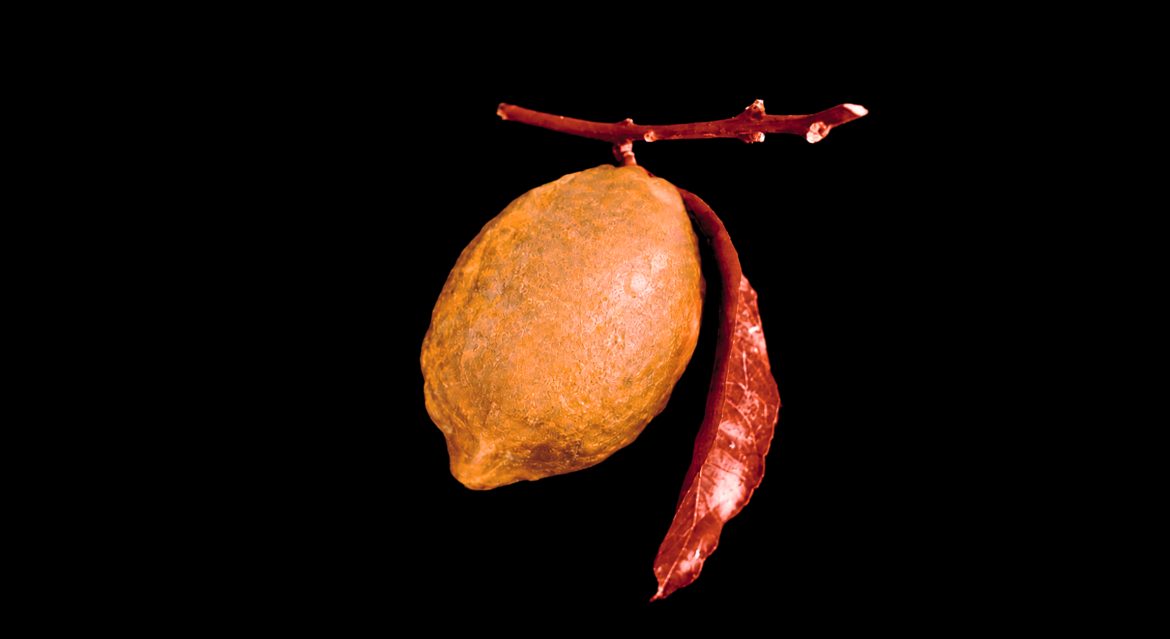
The thingy they gave me at the inception meeting – the third and last meeting I had with them, over as many days, each with a new person present, lawyer and psychologist and whatnot; they wanted to make sure you were not doing it on a whim – looked a bit like an old-school kitchen timer. Analog and inconspicuous, about the size and shape of a lemon. Technically, it was called a g’tHE, short for Gerardus ’t Hooft Entangler, from the name of the Dutch physicist who invented it, but no one called it like that. Entirely made out of copper, a shiny yellow-pinkish hue, and quite heavy for its size. On its top, or what I believed was its top, was a round dial that had to be rotated clockwise, a full turn; it would take a minute – exactly one minute, they told me repeatedly – for the dial to crank back to its original position, after which there was no going back. During that minute, and this was important, I had to spit into a little pipette they also gave me, shake it with whatever liquid was in there, and drop a few globs of the resulting slush onto a small test window on the lemon, just below the dial. The test window looked like a pregnancy test, or one of those small sticks to detect the presence of viruses we all had to spit on during the last avian flu in ’32. You know the ones. And then it was just a matter of waiting to see what would pop up.
“Don’t worry if the line has not appeared after the full minute has passed. Sometimes it takes a bit longer. Just be patient, it will appear.” The guy sitting in front of me as I was signing the contract had the nondescript face that bankers and salesmen have in movies. And dentists, but not the kind ones. At a certain angle, the thick square lenses on his glasses reflected almost entirely the light from the bulb above our heads, which made him look like he had two small retro TV screens fastened in front of his eyes. The effect was eerie, in particular when he smiled, which fortunately didn’t happen a lot.
“But be sure to apply the saliva to the test window during the one-minute dial phase. Applying it too early or too late will result in null effects. The phase lasts exactly one minute. Not one millisecond more or less. One minute, precisely.”
“I understand.”
“We also recommend using a chewing gum or sucking on a hard candy before triggering the dial, to stimulate saliva production. Don’t worry about flavors, that will not impact the test at all. We also warmly discourage smoking cigarettes, as well as the consumption of any type of alcohol, especially red wine, in the two hours before the expected usage of the dial. They-”
“-are conducive to xerostomia. Yes, you told me.”
Multiple times, in fact.
“Yes. Well. Please remember that failure to follow the protocol will result in a null disentanglement. No refund is contemplated in your contract for deviations from the agreed-upon protocol.” He looked up at me, his glasses turning again into shining TV screens. “Please also remember that the dial is single usage.” Was that a grin?
“Single usage. Yessir. Roger, Roger.”
I’m sure he didn’t get the reference. I signed, retrieved the package with the various items needed to perform the procedure, and got the hell out of there.
“Let’s say it works, then.” Art, his hands fidgeting on the table in front of his plate, a pile of fish carcasses overflowing on the paper tablecloth, wasn’t having any of it. “So what? What happens? Do you just split in half or what?”
“Please tell me that you’re joking.” But I was smiling, or attempting to. Humor had always been a way for Art to appease and reconcile. I would miss him. Perhaps.
“Ok, ok, I’m kidding. But, seriously. Tell me again why you’re doing this.”
“Counterfactuals, mate.”
“Counterfactuals.”
“Yup.”
“You’re insane.”
Dear Herbert,
Thank you for your kind note. It was a pleasure to discuss with you and Barbara the other day. I am flattered to learn that you have decided to offer me the position.
As you suggested, I took a few days to sleep over the generous offer and discussed it with my entourage. All things considered, I
That first part of the email, the easy part, I had written already a couple of days ago. The usual bullshit that readers skip and try to navigate directly to the juicy part, the one that matters. The yay or nay part.
The job was in Wellington. Professionally, the opportunity of a lifetime. A big jump upwards in terms of role and responsibilities, and a salary obscenely high. But the real pull factor was the destination. New Zealand. A land of new beginnings and mystical adventures. As far away from all of this as one could go. Cherry on the sweet sweet cake, the company would pay for my move and sponsor my working visa, which these days was almost unheard of.
But what about my dad? Could I simply fuck off to the other side of the planet and leave him here? Who would take care of him? He was not doing so well recently, his hip replacement procedure certainly not the success story he was telling me.
And what about Art? He would take it poorly if I left. Should I stay and help him get out of this rough patch?
And then there was Lisa. Lisa Lisa Lisa. She was not interested in me, that much was clear. For now, at least. Moving to the other side of the planet meant essentially giving up on her for good.
Decisions, decisions. The stuff that keeps you up at night. But no longer.
The Lemon would decide for me.
I went to the commode in the living room, opened the bottom drawer, took out the box with the lemon-sized dial, and walked back to the kitchen table. I had not touched it since the inception meeting, last week. I opened the box and pulled out the Lemon. The thing was heavy, and slightly warm, certainly warmer than room temperature. Was it also vibrating? I brought it up to my right ear to sense whether any sounds were coming from whatever was inside. Yes, a very faint tinkle, like a microscopic silver spoon tapping on a tiny crystal champagne glass. Or a split nail slowly scratching on a blackboard.
I put the Lemon down, gently, then got up, spat into the trash the gum I was chewing, and went back to the table.
As you suggested, I took a few days to sleep over the generous offer and discussed it with my entourage. All things considered, I
In front of the laptop opened to the inbox, right under my nose, were the lemon thingy and the pipette.
I took up the Lemon again and turned the dial all the way to 60.000. It immediately started ticking and clicking. Suddenly, a strong metallic taste flooded my mouth, like licking a battery after sucking on a wound. I put down the lemon thingy again, making sure that the test window was visible, and picked up the pipette. I unscrewed the cap, and deposited a generous amount of metallic spit into it before screwing the cap. My spit looked a sickly reddish, but that could have been the chewing gum. I shook the pipette, turned it upside down, and squeezed several drops of spit onto the test window below the dial. The paper-like surface darkened, signaling absorption, and after a few seconds the control line appeared at the top of the window. Now it was just a matter of waiting for what result would appear at the center of the window. The yay or nay part.
Only about a third of the countdown to go.
A few seconds later, the arrow on the dial reached its original position with a final click, and that was that. Still nothing on the test window. I picked up the lemon thingy, which was now ice cold and, as I ascertained after putting it next to my ear, had stopped vibrating and tinkling.
Still nothing on the test window.
Then, as suddenly as before, but much more intensely, a metallic taste in my mouth made me wince. I went to the bathroom and spat a globule of blood into the sink. I looked up and saw that all my gums were oozing blood, as if I had just brushed my teeth with a metal sponge. I rinsed my mouth with water, and after a bit the bleeding stopped.
I went back to the table, and looked down at the test window on the lemon thingy.
One vertical line, blue and thick, had appeared smack in the center.
“One line yes, two lines no,” I said out loud. “Ok, then.”
I pulled the laptop towards me.
As you suggested, I took a few days to sleep over the generous offer and discussed it with my entourage. All things considered, I am happy to say that I have decided to accept the position. I am thrilled to be joining the team, and look forward to hearing what the next steps in the process are.
Please do not hesitate to let me know if I can provide you with anything else at this stage.
Warmly,
BSP.
And pressed send.
Only about a third of the countdown to go.
A few seconds later, the arrow on the dial reached its original position with a final click, and that was that. Still nothing on the test window. I picked up the lemon thingy, which was now ice cold and, as I ascertained after putting it next to my ear, had stopped vibrating and tinkling.
Still nothing on the test window.
Then, as suddenly as before, but much more intensely, a metallic taste in my mouth made me wince. I went to the bathroom and spat a globule of blood into the sink. I looked up and saw that all my gums were oozing blood, as if I had just brushed my teeth with a metal sponge. I rinsed my mouth with water, and after a bit the bleeding stopped.
I went back to the table, and looked down at the test window on the lemon thingy.
Two vertical lines, blue and thick, had appeared smack in the center.
“One line yes, two lines no,” I said out loud. “Ok, then.”
I pulled the laptop towards me.
As you suggested, I took a few days to sleep over the generous offer and discussed it with my entourage. All things considered, I am sorry to say that I have decided to pass on the opportunity. Please believe that it has not been an easy decision to make.
Thank you again for thinking of me, and for your kind offer. Many apologies for having had to decline it.
Best wishes,
BSP.
And pressed send.
“I’m going, Art. I signed the contract last week.” I looked up at him. “It’s done. I’m leaving next week.”
He didn’t say anything for quite a stretch. I realized he had already prepared himself for the possibility of me leaving for good, but until the very last moment he had hoped I would change my mind.
“You are leaving. For real.”
“Yes. I’m sorry. I will miss you, mate.”
“First Jess, then you. Fantastic.”
“I’m not leaving you, Art. I’m just moving somewhere else.” That almost felt true. What a shitty hypocrite I could be.
“But how can that thing know what your choices are? How can it give you advice on stuff so complicated that not even you can decide?”
“Art. Give me a break. Do I really have to spell it out again? I decided what the options were. The thingy only returns a random signal, one or two vertical lines. The other one gets the other signal. But I decided what those two signals meant.”
“One line yes, two lines no.”
“Precisely.”
“Like in that video.” So he did watch some of it.
“Yes.”
“And you got two lines.”
“Yes, Art, yes.”
“So what if you had gotten one line? Would you have taken the job and moved to fucking Auckland?”
“Wellington. But, Art, I did get one vertical line. That’s exactly what one of me saw on that thingy. Just not me. That other me might already be over there right now, for all I know.”
“But you saw two lines.”
“Yes.”
“Fucks with your brain a bit, innit?”
“It sure does.”
On my way to the drinks with Art, blinking in flickering neon above a high-rise, I had passed one of the many billboards that the disentanglement company had started to put all over the place.
What if you started again?
What if you followed her to the end of the world?
What if you didn’t invest all your money into that wonky idea?
What if you said “Yes”?
Find out your story. Your other one.
The billboard came in two versions, the other one asking readers to think what would have happened if they had said “No.” Which was exactly the idea.
It was a relatively new tech, but they were going all in. Billboards like the one I had seen were not cheap, especially when they were that big. And at locations like that one. They must have won some sort of public bidding to be able to advertise there. Defense or intelligence, perhaps? With a tech like that, especially if you know how to scale it up, the world is basically your oyster. That was not a reassuring thought, given the current administration. And the one before that. And the conglomerates they were working with.
“So there is another me, somewhere, who is sad that his best friend has gone to the other fucking end of the planet?”
“Yes. Probably.”
“What do you mean, probably?”
“I have no idea what the other you is doing right now. Perhaps he drowned his sorrow in booze and pills. Perhaps he’s now a little pile of ash and dust in an urn.”
“That is fucking bleak.”
“Or perhaps he finally got his shit together and decided to get back to that diploma you chickened out of a couple of years ago.”
Art looked down at his pint. “Wouldn’t that be nice.”
His distress mellowed me. “What is stopping you, Art?”
“Let’s discuss something else.” He took another long sip of his pint.
“Remember to breathe.”
Usually stuff like that would at least elicit a smirk. With a little luck, even one of his famous smiles, which would light up his whole face and make everybody lucky enough to be standing in front of him forget their woes, at least for a bit. But not tonight.
“Listen, B. I have to say, I’m not sure how I feel that your little thingy also created another one of me.” He paused. “Actually, I hate the idea.”
I was wondering when that specific matter would come up.
“In which ways is your life, this one right now, different than it was before I told you that I had used the Lemon?”
“I mean-”
“It isn’t, Art. It is as simple as that. I could’ve not told you, and you wouldn’t have realized that anything at all was happening. And the same goes for the other you.”
Perhaps I should’ve; it would certainly have been easier that way.
“Yes, but-”
“As far as we know, this is happening all the time. Plenty of other people use that thing. And there is nothing we can do about it. Knowing it has no effect whatsoever on our life. This life.”
“Yes, I’m sure you are able to set aside the thought of multiple yous going around the multiverse, or whatever. But not everybody is able to compartmentalize their thoughts like you.”
Touché.
“Listen, I’m sure you have thought this through. And I’m happy that you are staying. You are staying, right?”
“Yes, Art, I’m staying. For the last time, I am staying. That’s the whole point of it.”
“Ok, great. But, B.-”
“Yes?”
“Can you ask him- You, I mean, when you see him, when you see your other- Fuck. Ok.” A deep breath. “Can you ask him how I’m doing on his side of the story, or whatever? Could you ask him if Jess came back, perhaps?”
“It’s going to be in five years, mate, when the link happens.”
“Yes, I know. I know. But by that time she must have realized that dude is no good for her.”
It was puerile to assume that Jessica’s train of thought and decisions over there would differ in any way from her ones over here – I didn’t know her, not really, and had had almost no contact with her since she walked out on Art, so nothing would change in her life depending on me staying or leaving. But that was something I preferred not to bring up.
Five years was the standard debranching time the company recommended for the type of decisions I had used the Lemon for.
“That is usually sufficient time for the effects of the decision to take root,” said the pair of glasses with whom I had talked last, once all the checks were done and the contract was finally in front of me to sign. “But it is also short enough, in case you both realize that one of the two decisions was clearly the wrong one. That can be a distressing realization, for the one in the worse-off branch, so to speak.”
“I understand.”
“And, of course, the longer the time span between the disentanglement and the link, the higher the chances that, well, one or both of you will, ehrm, not be able anymore, so to speak, to report to the other one.”
Jesus. But fair enough.
There was of course also another matter to take into account: intervening factors muddling causality. The more time passes between the split and the moment you check in with your other you, the more unlikely it is that any differences between the two stories are uniquely due to the different path you took upon disentangling. In the long run, the importance of single choices made decades in the past to explain who you are and how you feel today falls to zero.
The general gist was simple, at least on paper. After an agreed-upon time, five years in my case, you and your other you would meet and chat about how things were going in your respective lives. Your stories. And try to figure out which of the two paths had been the most successful one. The idea, again, on paper, was that nothing is ever too late in life – and that knowing what the consequences of a different choice would have been could still give someone the chance to change their lives around.
“And how will you meet him? Will you travel back here and meet the guy who stayed?”
“The other is not ‘staying here’, Art. Not in the way you mean. It is not like I will be down there, and he will be there. I cannot simply jump on a plane and come back to visit him. Unless they have invented a plane that flies between metaphysical branches.”
I was actually not entirely sure how the contact – the “linking”, using their pompous and vaguely retro sci-fi language – would happen. At the final inception meeting they also gave me another widget, that was supposed to create a “space” where the two of us could meet. That other gadget, which was already safely packed in my hand baggage, looked a bit like a Game Boy, cassette and all. It came with an instruction manual as thick as Blije Vissen’s menu, which I had quickly leafed through but had not really read in detail. There were plenty of passages about finding a proper place for the linking, about avoiding sensory over-stimulation, about perceptual conductivity, and other stuff like that, which, I’m sure, would become clear at the proper time. And, like everybody else, I had of course seen Max’s videos. Plus, five years was an eternity.
As all proverbial revolutions ought to be, the first disentangling had been televised.
Due to its metaphysical nature, the tech did not have any immediately visible effects. You turned a dial, you spat on it, and that was basically it. Even if something happened, you didn’t really see it. All was rather anticlimactic, at face value. But providing tangible proof that the disentangling does happen was of capital importance, both for scientific reasons and to enhance the marketability of the procedure to the public at large. Extracting a commercial benefit from the tech had never been something the company that developed it made a great mystery of. While most of its fundamental R&D had been supported by public funds and grants, the technology was privately owned and commercially patented. But they needed, first, to show that what they had in their hands was not simply a proof of concept. They needed to show the goods.
The first disentangling was thus done under strict live video scrutiny. The subject of that split – the first ever to do so, as far as the world knew – was a man in his early twenties, Max, who had been selected out of a pool of people who volunteered for an unspecified experimental procedure against considerable compensation. Max was told that there was a 50% chance that he would be asked to ingest a pill, once a day, for a month; a pill that would alter the pigmentation of his skin, perhaps irreversibly, but would likely not have any other major adverse effects. And a 50% chance that he would not be asked to do that. He would be paid regardless. But if chance would require him to take the pill, then he would need to comply. No matter what. Without faltering. He would also need to consent to be filmed 24/7.
He signed. Of course, he did. We all saw him do so, sitting on a rickety metallic chair in what looked more like an interrogation cell than a lab.
Two cameramen with steadicams were following and filming Max constantly. They had started filming him during the last meeting with the scientists, when the rules of the experiment were explained to him and the contract was read line by line to him. And they had not stopped filming him since. The two cameramen were alternating, so that there would always be at least one person filming the candidate, for instance when the batteries on one of the cams had to be replaced. Everything that the two cameras were filming was broadcast on a live YouTube feed, showing a split camera perspective. At all times Max could be seen, in either one or both camera angles. Including when sleeping, showering, or using the bathroom – for the two latter activities, cameramen had been instructed to turn the audio off and only film him from the waist up. But he was otherwise always in the crosshair of the cameras.
The two cameramen had been of course present at the moment of the split. All viewers saw Max going through the moves that would quickly become familiar to many. Turning the dial on the Lemon – as the thingy would later be officially christened by the vox populi. Spitting in the pipette. Squeezing a few drops of reddish saliva on the test window. Waiting.
“One line yes, two lines no,” said Max out loud. A reminder of what the two options meant appeared at the bottom of the video.
After a couple of minutes, the live feed that I, and millions of other viewers, had been watching – the event had been hyped up for weeks via a viral campaign that said little but promised wonders – showed one thick blue vertical line appearing below the control check. We didn’t know this, of course, but at the same time, somewhere else, other versions of those same viewers saw two thick lines appearing on screen. Our reality layer saw one. Theirs saw two. Disentanglement at play.
Max turned towards the cameras and explained what was evident to all viewers. He was holding up the Lemon and showing it to the world.
“One line. It means that I will take one of these little pills-” at that, he lifted up with his left hand a plastic box and rattled it in front of the camera, “-each day. At 1pm, Pacific.” He put down the pill box and looked at his wristwatch. “Which is in fifteen minutes or so. Stay tuned. This thing is freezing, by the way.” And he put down the Lemon, which he had been holding in his right hand, on the table, with a clunk.
For fifteen minutes we watched him idle, engaging in some small talk with one of the two cameramen, the younger of the two; the other one, a portly man in his sixties with a long white beard who looked like what would exist at the Venn diagram intersection between GRR Martin, Santa, and Karl Marx, was less chatty. Nothing of note was discussed, nothing happened. But. I. Could. Not. Take. My. Eyes. Away. From. It. Something was happening. Clearly. There was a tension in the air that was evident even from across the mediated distance between us all and that lab room. The air in that room vibrated.
At 1pm PST, the CASIO on Max’s left wrist, which he had programmed immediately after announcing that he would move ahead with the plan as instructed, beeped and vibrated loudly. He squeezed the wristwatch to stop the beeping, pulled the hard-plastic case towards him, and opened it with a faint click. On the live feed, the left-hand side of the screen was pointing at Max, whereas the right-hand feed zoomed in on the content of the plastic case. Inside it there were thirty little compartments, three rows of ten. Each contained one relatively large pill, about the size of an almond, of a deep orange hue. I would never be able to swallow that thing, I thought. But Max apparently was. He took with his left hand the pill out of the top-left compartment, showed it to the camera, and swallowed it with a sip of the water in the glass in front of him. Like instructed to do in the contract, he then looked straight at the camera, the one broadcasting on the left-hand side of the screen, and opened his mouth pulling the tongue out to prove he had swallowed the pill. The superimposed text on the top-right of the live feed updated from “MaxA/day1/pills0” to “MaxA/day1/pills1.” A rolling day/date/time stamp, precise to the second, was underneath it.
All of that happened in a room within the facility of the company. Except for reporting back every day at the facility to take his pill and undergo a quick physical check, Max was otherwise free to return back to his own place and live his life more or less as he would have outside of the experiment. There were naturally some conditions; on top of being constantly filmed, production had also asked Max to provide a shortlist of persons with whom he would interact during the monthlong experiment – close friends and family members; Max was single, which was likely one of the reasons he was also selected. The persons on the shortlist were screened, and had to sign a contract stipulating what they could and couldn’t do with Max. For security and privacy reasons, these were the only persons he could interact with. No going out to bars or parties, no mingling with acquaintances. No talking to strangers on the street, in supermarkets, on public transport.
That first day Max went directly home, in a cab – one cameraman sitting next to him on the back seat, the other one on the front seat filming back at him – where he had organized a dinner with a couple of his friends. There is not much to say about that first evening. Millions of people were still tuned in, and watched him cooking a pasta (carbonara), opening some bottles of wine (red), and engaging mostly in small talk (awkward). After his friends left, Max sat for a bit on the couch reading a book. Across his living room, the TV showed a news channel that, briefly, mentioned the ongoing experiment and showed footage from earlier in the day, footage that many of us had seen in the live feed. He then went to bed, turning his back to the cameramen as he lay down. During the night, the feed was mostly one single viewpoint, the two cameramen likely alternating between filming and sleeping. That first night, I stayed up to watch the footage almost uninterruptedly. I briefly fell asleep, sometime between 2 and 4am, but a quick scan of the various forums that had started popping up since the start of the experiment confirmed that nothing of note had happened during my blackout. Speculation was rife as to what exactly we were witnessing, as nothing much seemed to be going on.
The next morning Max got up, showered, had breakfast, read the news online, and idled until he had to leave for the meeting at the facility, to which he was ferried by a company car that had been waiting outside of his place. At the facility, he got welcomed kindly but a bit wearily by the same personnel that had been present the day before, suggesting that they also didn’t get a particularly restful night of sleep. After a short physical exam, 1pm came and with it the time for the second pill. Which he took, as prompted. Tongue check. Nothing of note.
Max went home. No dinner party that night, but a phone call with his parents, which we all heard from the speakerphone he was contractually required to use whenever on the phone. Then a (very) early dinner, followed by some reading on the couch, on which he fell asleep. The two cameramen after a while set the cameras on a tripod, both pointing at sleeping Max, and could be heard playing a game of cards on the table across the living room. Scopone Scientifico, I thought. Good for them. Max was snoring slightly, a thin line of drool dropping steadily onto the pillow underneath his face. At around 4am, I read the next day on the forums, Max migrated from the couch to the bed.
The following day was more of the same. And the day after. The day after that, as Max was exiting the facility, “MaxA/day5/pills5” now appearing on the top of the screen, viewers of the live feed could see that a considerable crowd had gathered in front of the entrance. People, of seemingly no specific demographic, were mostly well behaved, and were clearly there for him. Crowd control barriers had been erected on both flanks of the short walk between the entrance of the building and the black SUV that was waiting for Max. The crowd that was stockpiled on the outside of the barriers was five or six persons deep – not really Rolling Stones concert levels, not yet. But certainly more than what any B-list actor unveiling their star on the Walk of Fame would have dreamed of. The enthusiasm of the crowd went up a notch when, upon exiting the facility, Max flashed two victory signs at them, high up in the air, Nixon style. One of the onlookers, a dudebro with sunglasses resting on the bill of his baseball cap, was holding a cardboard sign where it was written in upper-case Sharpie “HEY MAX, SAY HELLO TO MY GRANDMA!!!” Not sure what that meant – was the dudebro’s grandma working for the company? Did Max know her? But that did not seem to perturb him in the slightest.
“Hello to my grandma,” he said, with a grin. The crowd roared. A hero was being born in front of our eyes. He was clearly having a blast.
He was much less keen when people started jumping over the fences to try and hug him or give him stuff or spit on him. From day7/pills7 onwards, three bodyguards were by Max’s side every time he was walking between the SUV and the facility. On day9/pills8, just as he was exiting his place to get into the SUV that would bring him to the facility, a group of twenty or so men all dressed in yellow started running towards him from the other side of the street. The hivemind had found out where he lived. I was actually surprised it had taken more than a week for that to happen.
From that point onwards a decision was made to relocate Max into an undisclosed indoor locality, where he was brought immediately after taking the pill that day. The place was big – he had several rooms at his disposal, and could basically do whatever he wanted. Food was brought to him once a day, when the lab people would meet him at his recluse place to administer pill and medical check. Selected friends would visit and spend time with him. He could read, exercise, watch TV, cook, draw, and go for controlled walks in an internal courtyard – the bodyguards scanning the sky above for drones before allowing him to cross the door. The two cameramen were also relocated to the premises, as well as the three bodyguards. He would even on a few occasions play one-on-one basketball against the first cameraman, using the hoop in the courtyard. Essentially, the experiment slowly turned into a boring version of Big Brother. The number of people watching the live feed, steady for the first couple of weeks, dwindled, with peaks every day at 1pm for the pill taking exercise. Max, on his side, was glowing under the constant spotlight.
Before we knew it, the month had passed. Upon arriving at the facility on day30/pills29, Max was told that later that afternoon, after taking the last pill, the experiment would be concluded. By then, the craziest rumors had been starting to circulate online about what the goal of the experiment was. A new cure for this or that? Nanochips? Invisibility, perhaps – Max had been unmistakably sporting a jaundiced complexion for the past week or so.
But the reality, as we all discovered that evening, was much stranger.
Just before 3pm the lead scientist invited Max to stand in the middle of the room, to the left of the table, and gave him what looked like a first-gen Game Boy. The two cameramen were instructed to stand just a couple of meters behind him, and were filming him using wide lenses from two different angles, so that each cameraman was visible in the corner of the other’s frame.
At 3pm sharp the lead scientist told Max to “do it. Now.”
Max lifted the Game Boy thingy in front of his eyes, put his right thumb on a little slit on its front, towards the bottom – which, as I would learn later, would puncture his fingertip and take a couple of drops of his blood – and flipped down with his left hand a switch on the left-hand side of the thingy.
The light in the room flickered.
Then, in front of Max, hovering about one meter off the ground, a small sphere of nothingness started to expand. Like turning off an old cathodic TV, the image collapsing into a small black hole in the middle of the screen, then popping out of existence – but in reverse. Slowly, at first, then all of a sudden, Max, the lead scientist, and the two cameramen were engulfed by the sphere that had expanded beyond where they were standing. Before my brain had the time to consciously process what my eyes were seeing, my unconscious mind served me with a visual point of comparison. Looking at the scene was like standing in front of Van Gogh’s Potato Eaters – a bright light in the middle of the painting that creates an intimate space and fixes the scene, deep dark corners of gray-green penumbra all around.
Max, the lead scientist, and the two cameramen were not alone in there.
In the halo created by the expanding sphere, standing next to the table, were four other people: Max, the lead scientist, and the two cameramen.
By now, everybody knows what the Lemon does, and what the Game Boy allows you to accomplish afterwards. But that first time, seeing a first glimpse of the disentanglement, the puzzled look on Max’s face, the lead scientist so overwhelmingly excited that he could not stop laughing, the two cameramen filming the scene and each other and their other selves, was one of those moments that one doesn’t forget. Footage like that immediately becomes eternal, belongs to humankind. Moon landing. 9/11. The Zapruder movie.
The lead scientist, the two of him, turned towards their own cameramen and quickly tried to explain what was happening. Then, awkwardly coordinating with their other self, they convened the two Maxes in the middle of the halo and asked them to stand side by side and look at the four cameras.
Our Max clearly had acquired a yellowish, orangish hue on his face and his hands. The comparison with the other Max was evident. And he had also gained weight – apparently, as we would learn afterwards, one of the countereffects of the pill was to stimulate the appetite. Our Max was clearly more on the plump side than the other Max. The two Maxes were looking at each other in disbelief. Neither of them had said a word so far.
Curiously, one of the two cameramen, the younger one, was dressed exactly the same as his other self – corduroy pants and a yellow-mustard button-down shirt, which perhaps he thought was fancy. The two versions of Santa cameraman, on the other hand, were dressed differently.
A memorable feature of the linking event had been when the two Maxes were handed by one of their respective cameramen, Santa, their respective laptops – the very same laptop, originally – and set them side by side on the table. Closely filmed by the two teams of cameramen, both Maxes were told by their lead scientist to navigate to their YouTube feeds, which were, mind-bendingly, live casting what was happening in that very moment, so that we could see on their screens what the cameramen were filming in an infinite sequence of smaller and smaller screens, all the way down like the turtles.
The two Maxes confabulated shortly, navigated to the archive section of their YouTube pages, and selected a specific clip. After synching the starting point, they both pressed play. The left-hand side of the split screen on my feed showed the two laptops; the right-hand side was filming the room and the two Maxes, and their reactions. The clip that was shown by the two Maxes was labelled, on our Max’s laptop, “MaxA/day6/pills6.” On the other Max’s laptop, it was labelled “MaxB/day6.” I had thought, until that point, that ‘A’ was the initial of Max’s last name. I’m sure the viewers on the other side of the astral divide thought the same for ‘B.’
The clips showed Max, both of them, going to a dinner party at the house of his friend Anna. I remembered watching that event unfolding, live. The two versions of the party were almost identical. Same jokes made by Anna and her sarcastic partner. Same bottles of red wine on the table, opened at the same time. Same music on the record player, ABBA followed by Queen followed by Bowie and followed, rather incongruously, by East 17. Some differences started to appear after a bit, but all relatively marginal. Their Max drank a little bit more, and a little bit more quickly. Our Max, MaxA, had eaten five big slices of pizza that evening – I actually remembered people commenting on it in the live chat next to the feed; their Max only ate three. And, upon close inspection, our Max was looking already a tad more orangey than their Max. But except for these differences, it was exactly the same event shown on both screens. Synched dialogues, same smiles at the same moments, people standing up to go to the bathroom at the same time. It was the same event. But none of the people at the two events were the same. Even if, technically, they were. I wondered what Anna and her partner, and the other handful of attendees, were thinking right now. Both versions of them. It must be quite the mindfuck. And what was my other me, who had undoubtedly followed MaxB the same way that I had followed MaxA, and was also certainly in front of his screen watching all of this unfolding from his side, thinking about all of this?
A couple of years have passed since that astonishing moment. And I’m now certain that seeing Anna’s two pizza parties, side by side, was what convinced me that this shit was real.
In hindsight, I realize now that it was two pizza parties at Anna’s, side by side, that planted the seeds for my decision to go ahead and use the Lemon. I remember being astonished at what I was seeing, at the possibilities that such a technology implied. I wonder what would have happened if they had chosen another clip, perhaps one where the differences between the two Maxes were less apparent. At what point do we start not looking anymore like ourselves? The question raised other more fundamental questions about contrasts, about the role of hypotheticals. About comparing options and trajectories. I wonder what would have happened if instead of feeling awe, that day, looking at the two versions of Anna’s party, I had felt dread, like I was feeling now. Would I have used the Lemon anyway? Would I have left for Wellington, as I did, or stayed, like part of me really wanted to? And, was my other self also starting to have doubts about this whole thing?
Not leaving for Wellington took a toll on me. It has since become clear to me that I had not been able to be honest with myself; I know now that, deep down, I had decided to take the job. Screw the Lemon, I should’ve simply taken the job, should’ve been braver. But decisions decisions decisions. Fifty percent are not bad odds, but the coin had fallen on the wrong side. I should have gone. I hope at least that other me over there is feeling differently, that he is having a grand time. May he burn in hell if not. Both of them. It should have been me. I had considered several times going to Wellington anyway, agreement or no agreement. Would it have been anyone else, even Art, to whom I had made the promise not to go, I would have gone. But I had promised myself. And, current feelings aside, I genuinely wanted to know whether going would have been a good idea, compared with not going. Counterfactuals, mate.
The truth is, that tech was astonishing. Scary, but astonishing.
Things had changed rather drastically since I had used the Lemon to create another story of me. The first time I used it, that is.
Medical research had immediately jumped on the opportunities that the new tech provided. Gone were the days of randomized controlled trials, only effective if the two samples were comparable down to the smallest element, which they often weren’t. Randomization could only go so far, when the teeny-weeny effect of an infinitesimal dose of a substance was what you were really interested in. Perhaps the control group is so slightly older, or has a slightly different average genomic profile than the treatment group, and any difference between the two groups in the outcome is due to that, not the injection. But with the new tech, checking the effect of being injected with any given substance, say, a new anti-aging serum, can be done against not injecting that substance on the very same individuals. A mad scientist’s dream. Contextual circumstances could still come into play to muddle the effects, of course, but essentially you were comparing exactly the same test cases, with and without the experimental treatment. Causal attribution on steroids. In hyperspace.
From an ethical standpoint the disentanglement procedure also facilitated matters greatly. It was no longer the case that a random half of all participants would not receive a potentially life-saving treatment; all trial participants would receive it, just not all versions of them. But, upon signing, all participants were certain that they, a version of them at least, would receive the treatment. And that worked miracles for recruiting participants.
The Lemon had also had consequences for the way we all lived our lives, and the way we saw each other, and our place in society. From the very first months, people became braver. People took more chances, said yes more often. Since the widespread diffusion of the disentanglement tech, more people were volunteering for dangerous jobs. Firefighters and deminers, to give just a couple of examples that had been in the news, had never been more popular or less short-staffed. And, according to some indicators, social isolation was dropping across the world, including in the UK and Japan, countries that had historically been particularly affected by loneliness. What a time to be alive.
Since the Lemon told me to relocate to Wellington, things had changed quite drastically. We were now half a decade into the widespread diffusion of the technology, and its societal effects were starting to come afloat. All rotten things do, eventually.
Of all new techs that have been hyped as being transformative, only a handful genuinely has been. The airplane. The TV. The internet. And the Lemon. The possibility to disentangle yourself and compare counterfactuals of major life decisions had changed the way we lived with each other. As simple as that.
The metaphysical element at play captured the collective imagination of philosophers like no previous moral dilemma had ever been able to. A trolley problem on acid. Whole new ways to mull over and digress about cause and effect. Liability and accountability. Responsibility and impulsivity. Right and wrong. Philosophers and thinkers went to talk shows, published short moral treatises with prestigious academic presses, collaborated with artists and poets, and redesigned the content of their courses. Perhaps surprisingly, their initial leitmotiv had been, almost exclusively, romantically optimistic, if sometimes cautiously so. A technology that could allow you to witness, from the front seat, the bad consequences of misguided choices, ought, on paper at least, to promote thoughtfulness and restraint.
But they were misguided in their optimism.
People, and thus society, had in fact become much more reckless, at a speed that had surprised even the most cynical observers. Life choices that would have been in the past more easily rejected because too extreme or risky – send your boss that nasty email you had written, try out that new pill that might or might not fuck up your brain, leave family and kids and friends behind and start a new life in Argentina, put all your money on 15 black at roulette, take part in your cousin’s armed robbery – were now much more likely to be tried out. Not always. But more often. And more often multiplied a million times changes the balance of things, on a large scale. Slightly, slowly, but surely, society became less cautious. Restraints were questioned, then challenged, then abandoned.
And with recklessness came irresponsibility. And unaccountability. Risky actions were both done and not done, in the big scheme of things. And because the choice to do them was, arguably, a simple matter of random chance, the moral guardrails against actions that could be harmful – especially against other people – were swept away.
I didn’t do it, your honor, the Lemon decided for me.
Moral relativism became the ethics of the time.
Who am I to judge if doing this is better or worse than not doing it? Let’s try both and compare!
Utilitarians of the world, unite.
Calculations about the consequences of this versus that replaced universal moral considerations. Whether something ought to be done or not became a matter of tradeoffs between known pros and cons, and any choice with more positive consequences intrinsically became the right one.
Some politicians tried to push back. Lawmakers here and there tried to introduce motions to prohibit, curb, or at the very least control the use of the procedure. Among the most radical propositions was the one by a British lawmaker, who urged public powers to confiscate and “nuke the shit out of them,” his words, all widgets to operate the disentanglement and the subsequent link; especially these latter were to be disposed of swiftly and absolutely. Without the possibility to check back on how the other version of yourself was doing, he argued, the split in itself was useless. But their motions, nuanced and radical alike, were swept away by a new wave of counterfactual policymaking, building on the idea that understanding the consequences of competing policies was ultimately for the greater good. Across the world, governments started experimenting with it. The Dutch government, in a frenzy of half-baked initiatives so typical as to be almost endearing, set up a series of counterfactual policymaking programs to test for the effectiveness of universal income, free long-term social housing for homeless people, unlimited spending for election campaign financing, car-free city centers in Amsterdam and Maastricht, and closed borders for non-EU citizens. And many other governments followed. Less than three years after its mass launch, the Lemon had entered legislatures, administrations, executives, councils, and judicial organs in most democracies and constitutional republics. And, it goes without saying, in more unsavory regimes.
It’s from the bottom up, as is often the case, that the most successful form of resistance took hold. Initially, the nameless movement was little more than a loosely connected network of intellectuals, philosophers, and moral objectors, who congealed around an ill-defined manifesto to bring back Reason – capital “R,” s’il vous plaît. Their initial attempts to get traction in the public at large, symposia and the like, went however almost entirely unnoticed. The Lemon technology was already so pervasive that inertia alone could sustain its existence for centuries to come.
But discontent festered, and with it the growing realization among the cadres of the still nameless movement that conventional means would not be sufficient to reverse the course of history. The second dawn of the movement, many observers later agreed, came one cold February evening. After a generally unremarkable day, in the big scheme of things – some marriages, some deaths, some births, some crushed dreams – many in the northern hemisphere, puzzled by a strange halo that had seemed to descend from the heavens as day led into dusk, looked up at the full moon and saw, projected on her venerable face-
NO,
YOU
KANT
Enormous block letters so vast that they must have been the size of continents. So brazen was the stunt, so overwhelming its reach, that the nameless movement suddenly found itself under way too much scrutiny – and went underground.
It took me almost four years to get access to the local chapter of the Kant movement, in Wellington. I had suspected for several months that the group was meeting in the basement of the quirky Fidel’s Café (“Serving the people since 1996”) on Cuba Street – but getting in proved challenging and required a delicate balance of perseverance and luck. After years of failed attempts and failed subterfuges, it turned out, serendipitously, that a woman named Fran, who I had befriended early on, was the partner of one of the big shots in the local chapter. Fran, begrudgingly, ultimately agreed to sponsor my access to the group. By then, the movement had turned quite radical, perhaps beyond what I could stomach.
One night, as I arrived in Fidel’s basement, the small handful of people already present, sitting in the uncomfortable plastic chairs and blowing into the nuclear-hot coffee in their disposable mugs, were discussing a new reality TV show that had been broadcasting on the state channel. In the show, participants are filmed during the weeks leading to a major decision, use the Lemon, and have then a month to make the most of the outcome. After the split, when both versions of the participant meet, the public on both sides votes to decide which of the two versions was the better off; the winner would receive an absurdly large sum of money from the loser – up to them to find ways to get the money they now owed the winner, if they wanted to avoid crushing penalties for their whole family. No holds barred, said the playbook of the show. All of this was of course gloriously filmed, in full color and to the last drip of sweat and blood. The public couldn’t get enough of either.
“So, anyway, I saw it live as it happened,” one of the guys already present in the basement was telling the others. “And now the footage is gone, of course. But I saw it.”
“And how was the dude able to breach the security and join the link?” asked another participant.
“I have no idea. Perhaps he was working for the TV station. Or had infiltrated them. But, listen to this.” He was getting excited, his face flushed with the rush of people high on their own medicine. In all fairness, I had never liked that dude. He was one of those people who seem to have more comments than questions, who finish your sentences for you, especially if you are a woman. He continued: “The dude had a K group armband. Yellow and all. Big black K on a circle. The whole thing.”
“Give me a break,” interjected again the other participant.
“Listen to me, I saw it. Like I see that green hat on the new dude,” he said, pointing at my new green hat, more of a beret, really, that I had impulsively bought from a stand at Harbourside Market. Even after six months I was still the new dude. Fucking asshole.
“Ok, let’s say he was K,” interjected Fran, who had arrived in the basement shortly after me. “And then what? What did he say? What did he do?”
“You all know what he said. The usual.”
“And then?” By now, all people in the basement were hanging on his every word, which is exactly where he liked them to be.
“And then the dude takes out the gun. But this is where the story gets really interesting.” A dramatic pause, an excessive long sip from his plastic cup, his eyes scouring the crowd from above the rim to gauge how much of a hold he had on them. On us.
“Interesting how?” asked one of the other participants, clearly unable to understand he was playing entirely into the hands of the speaker.
“Well, a few seconds after he took out the gun, another one of him also jumped into the link.”
“What? What-”
“Think about it. That dude must have planned the whole thing for a bit, before himself splitting. Both versions went ahead with the plan, at almost the same time. But things didn’t go as he, they, had planned. Not entirely, at least. The second one who popped in, perhaps stressed to be late, took out the gun and shot both versions of the participants. But he was sloppy, and also hit one of the cameramen.” Another dramatic pause. “And his other self. He killed his other self.”
Thankfully, after that melodramatic reveal, the quorum of participants was reached, and the meeting proper started.
That was to be my last meeting, I decided later that evening. I did not see myself reflected anymore in the spirit that was exuding from the group. That evening, interspersed with the ordinary agenda items, mention was made several times to take things up a notch. No one really proposed anything concrete, but mention was made, indirectly, of various violent stunts committed by more radical fringes of the movement across the world. Intimidations. Extortions. Kidnappings of people working for the disentangling centers. Blowing those centers to pieces. Blowing their cars to pieces.
“Like they did in Seoul,” said one participant. Everybody nodded.
“It is a moral imperative,” someone else said, which scared the shit out of me.
They were itching to do something. Some perhaps for good reasons. Others, like tonight’s storyteller, I was sure, just to get a kick out of it. Feverish, they all were. Discussions about long-term strategic goals were cut short, budgetary and other administrative matters were largely ignored. Action, now, was on everybody’s mind. Including, to my chagrin, Fran’s.
The group members had of course no idea that I was disentangled. And even less that my link was coming up soon – in less than six months, actually. I preferred not to give them any strange ideas. Time to pull the curtain on my short stint as a radical activist, and go back to my contemplative hikes in nature and other harmless endeavors.
The link could be done from anywhere. The two parties didn’t need to be at the same physical place when activating the Game Boy. They just had to find a place that was as much as possible unencumbered and uncluttered, and link in. That was basically it. And, of course, do it more or less at the same time. It was not very different than making a phone call; except that both had to call into a number that existed only on a separate plane of reality, and meet there. But otherwise it was just a matter of keeping up with the appointment made, and dial in.
Five years had gone by fast, all things considered. Especially the last two, after Art’s funeral. I was eager to see the other me.
Both other mes, actually. The one who left first, and the one who left a bit later.
But the original one in particular. I wanted to ask him if it had been worth it. If leaving everything behind and starting again had been the positive experience I, we, thought it might be. If he had taken advantage of it.
The link went smoothly. I knew he would be there as well. A bit thinner than I was expecting him to be, perhaps, a bit tanner. But definitely him, me. Seeing and talking to myself was a mindfuck. I had seen this situation a hundred times, on TV, but nothing prepares you for when it happens to you. Talking into a glitchy mirror. That’s what it felt like – not because you are talking to someone who looks like you, but because your brain expects the other image of you to enact exactly what you are doing and saying, but they do not.
“Holy fuck. You really exist.” That was him. And that was also an extremely common reaction after seeing your other you. Being utterly convinced that the procedure works is not sufficient. There is always a part of your atavistic brain that refuses the idea of multiple yous. We have been raised to cultivate our unicity and authenticity – you are your own unique and beautiful snowflake, and all of that – but the reality is that there is no singularity. The cat is both dead and alive, and you are both here and there. Always.
“Yes, well, sure. Glad that you exist too. And to see you.”
“Same. This is awkward, no?”
“It is.”
“What do we do now? We just chitchat? How have you been, how’s your life, how is Lisa, and all of that?”
“Yes, well, we can get to that. Of course. But-” I paused, not sure how to bring up the matter that was on my mind. Then I simply did.
“Listen, the other one should be here in a sec.”
“The other one? What do you mean? Who? Did you invite someone?” I looked at myself looking agitated.
“Well, it depends what you mean by that,” I replied. “It’s just us. But, there’s more of us. Listen, it’s not a big deal, actually. I used the Lemon again. Two years after you left. Same decision. Wellington or stay. It was again stay, for me. Fifty-fifty my ass.”
He didn’t say anything. I could see a small vein on the left of his forehead pulsating slowly, and instinctively my hand went up to my forehead to see if it was there as well. Mindfuck.
“Listen, I know this was not the plan. I know. But it makes no difference to you. I stayed, like I promised. I fucking stayed! But now we also have an additional datapoint. Wellington for three years, versus Wellington for five.”
“Versus no Wellington,” he said, looking at me.
“Yes, I stayed. I owed it to Art.”
“Art. Is he gone also in your-?”
“Yes.”
We remained in silence for a bit. Art would have hated it.
He had disentangled again after I left, the asshole. Part of me was surprised he did, part of me wasn’t at all. After all, it was all me, and I could easily see myself doing exactly the same if I was the one who had stayed behind. And perhaps it wasn’t such a bad idea. One extra datapoint, as he said. As I was pondering what to say next, the third of us popped into the link, catching us both by surprise.
“Hello, guys. Sorry to be late to the party.”
He was wearing a bulky vest, a bit conspicuous and out of style. He was also wearing, like me, the green beret I had bought, and he had certainly also bought, at Harbourside Market.
And he was wearing one of those silly yellow armbands with the black encircled K on the side. Of course, he was.
He looked at both other versions of himself, of me, a bit puzzled, but determined. I knew him. I was him, he was me. But also not at all. He moved a couple of steps closer to us and took off his vest, which he let fall to the floor. A very bad sign. His bulkiness was explained by the multiple sticks of Semtex linked by electric wiring and strapped to his chest, incongruously, with masking tape.
“No, you Kant,” the third version of me said, calmly, looking at both of us, and removing from the pocket of his pants a thingy that looked like a small-
Then our three universes collapsed on themselves, like turning off an old TV. Plop, gone.